
Last updated September 20, 2026
Free on-site gate assessment - hinges, posts, and your LiftMaster or Nice gate operator checked before anything is quoted
The assessment is free and the quote is the invoice.
 Before
 After
After Before
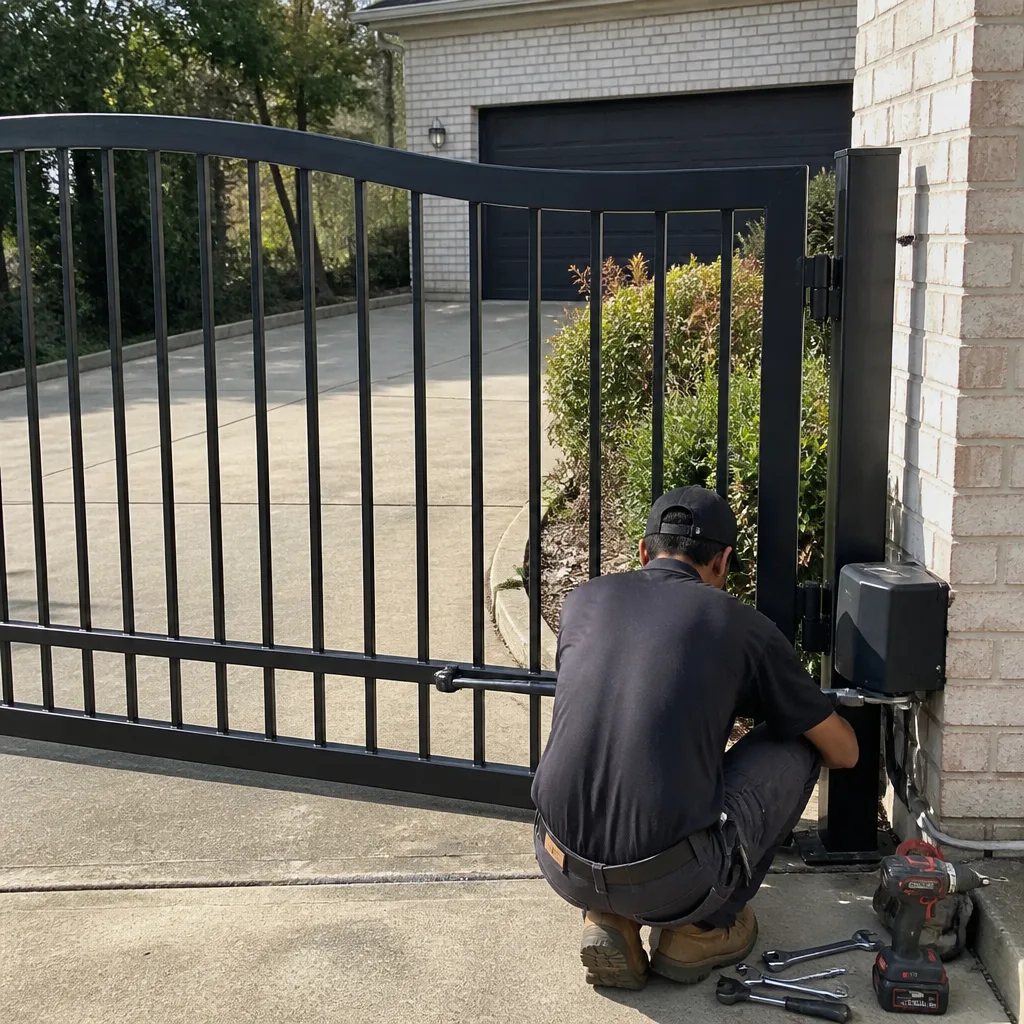 After
After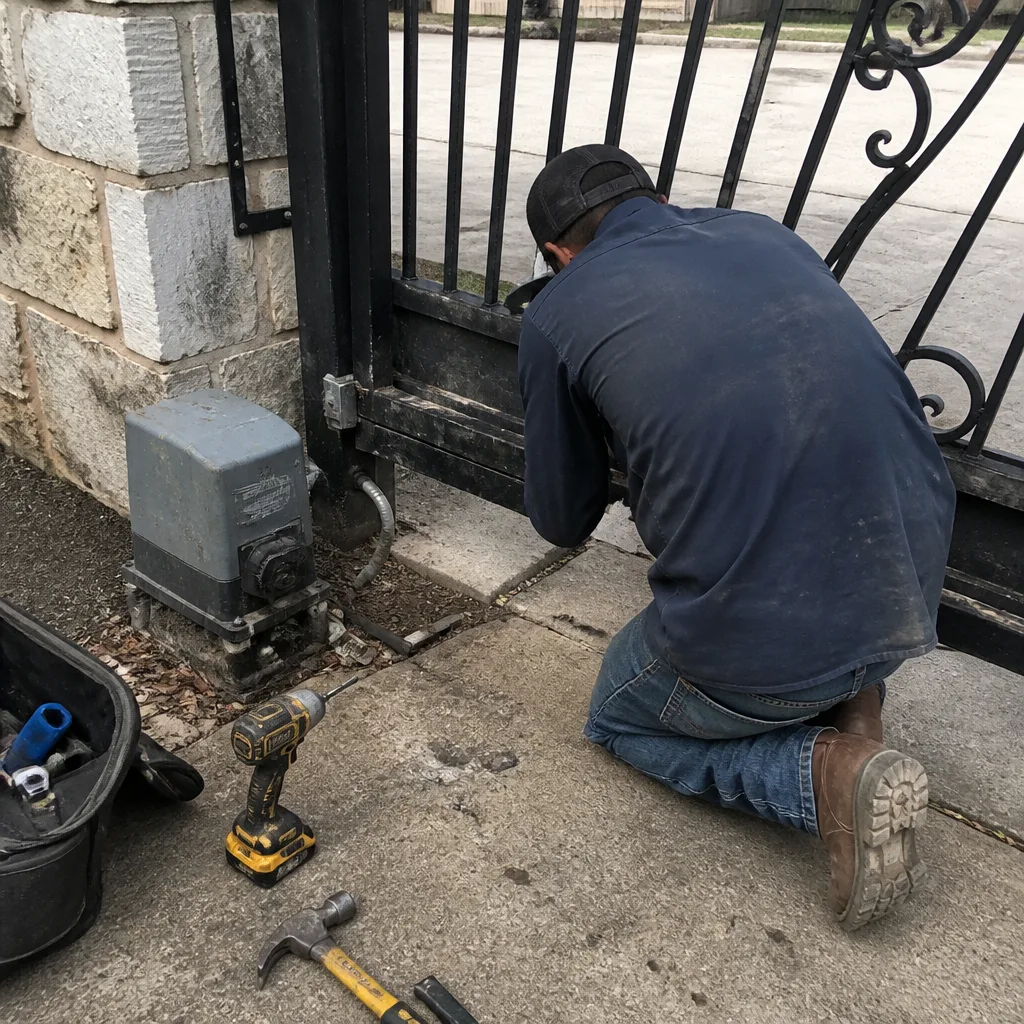 Before
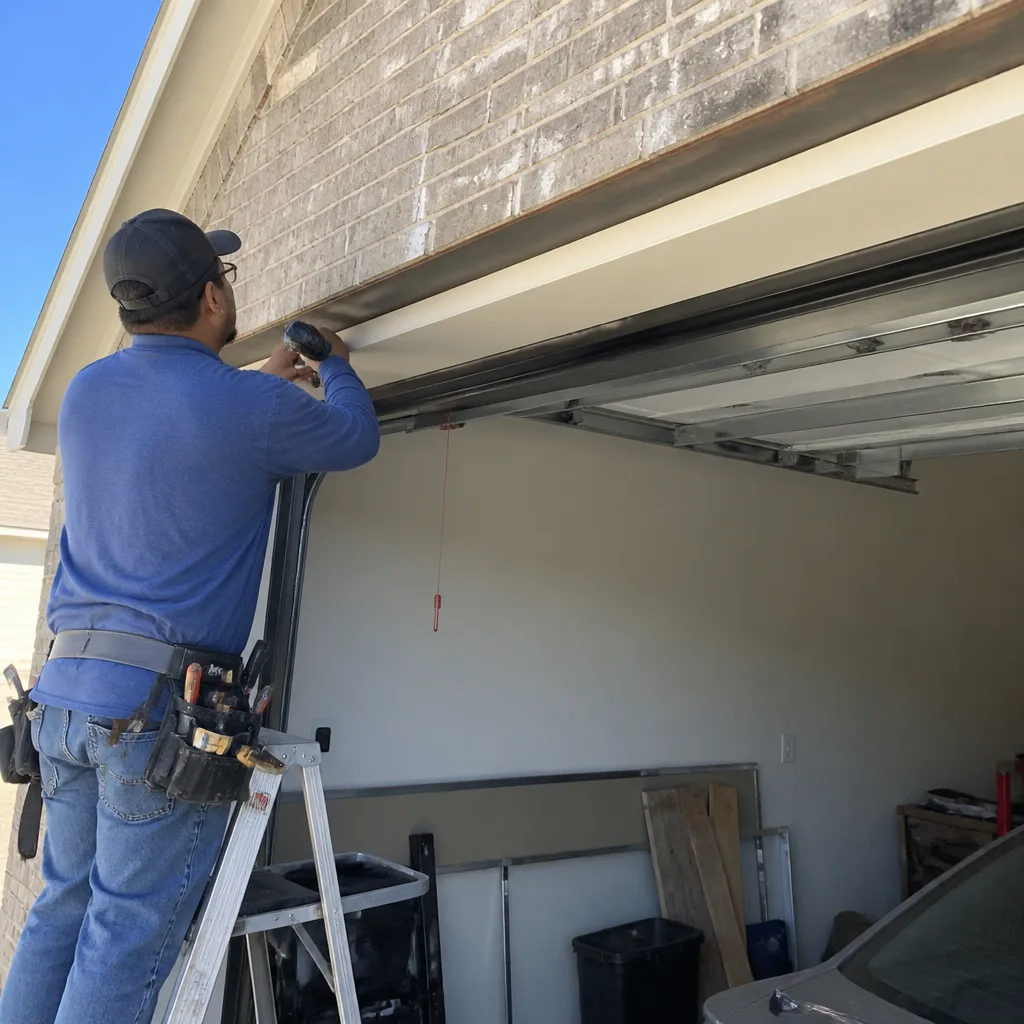 After
AfterThe Complete Guide to Gate Repair in Mansfield
The Blackland Prairie clay under most of Mansfield shifts enough each season to move a gate post by a quarter-inch. That quarter-inch is exactly the tolerance that turns a smooth swing into a motor that burns out every 18 months. If you’ve lived here long enough to watch a fence line drift, you’ve already seen the problem start. This guide walks through what actually breaks on driveway gates in Mansfield, what it costs to fix, and how to tell the difference between an adjustment, a structural repair, and a full replacement. For a deeper look at whether to tackle issues yourself or call in help, see our DIY vs Professional Gate Repair: The Mansfield Homeowner’s Decision Guide. We’ll cover the three root causes we see most often: soil movement, UV-degraded wiring, and mismatched replacement parts.
Quick Answer
Gate repair in Mansfield typically costs $125 to $450 for adjustments and sensor realignment, $300 to $900 for motor or control board replacement, and $800 to $2,500 for structural post and hinge repair depending on steel weight and concrete work. For a detailed breakdown of these figures, see our Gate Repair Cost Breakdown: The Mansfield Homeowner’s Reference for 2026. Most service calls are completed the same day, and any repair should start with a written price before work begins. The most common Mansfield gate failures trace to expansive clay soil shifting posts, sun-brittled wiring from North Texas summers, and universal replacement parts that don’t match the original system.
Table of Contents
- The Three Root Causes Behind Most Mansfield Gate Failures
- Gate Repair Category Index: What Each Fix Costs and What Failure Looks Like
- Why Mansfield Soil Moves Gates: Post Lean, Heave, and Limit Switch Drift
- UV-Degraded Wiring and Why Documentation Determines Whether You Pay Twice
- Part-Number Discipline: OEM Boards vs. Universal Substitutes
- Adjustment vs. Structural Repair vs. Replacement: Measurable Thresholds
- What You Can Check Yourself and What You Should Not Touch
- Common Mistakes to Avoid
- When to Call a Professional
- Frequently Asked Questions
- The Bottom Line
 Before
 After
AfterThe Three Root Causes Behind Most Mansfield Gate Failures
After servicing gates in Mansfield for over a decade, we can count the genuine root causes of driveway gate failure on one hand. Three of them account for the overwhelming majority of service calls. Knowing which one you’re dealing with changes everything about the repair: the part you order, the labor involved, and whether the fix will hold for five years or five months.
Soil movement. Mansfield sits on the Eagle Ford formation, a shale and clay belt that expands when wet and contracts when dry. A gate post set in this soil experiences lateral pressure every time the ground soaks up a spring storm, then settles again through a dry August. The post doesn’t just lean. It rotates around its concrete footing, pulling the gate leaf with it. The hinge geometry changes. The latch stops engaging. The operator’s limit switches, which were set when the gate hung true, now stop the motor at the wrong point in the travel arc because the gate’s resting position has physically moved.
UV-degraded wiring. North Texas gets roughly 230 days of full sun per year. Low-voltage wire run along a gate frame or fence line, especially wire without conduit, bakes in that sun. The insulation cracks. Moisture gets in. The copper corrodes from the inside out. We’ve pulled wire out of gate frames in Mansfield where the jacket crumbled in our hands, leaving bare conductor touching the steel frame and causing intermittent short circuits that drove the homeowner crazy for months. A photo-eye that trips at random, an opener that works in the morning but not the afternoon, a keypad that flickers: these are the fingerprints of UV-degraded wiring.
Mismatched replacement parts. This is the one that does the most long-term damage because it looks like a repair while it’s actually the setup for the next failure. A homeowner or a handyman buys a universal control board or generic hinge because it’s $70 cheaper, fits “close enough,” and gets the gate moving again for a while. But a universal board doesn’t match the OEM board’s current sensing, travel timing, or safety input configuration. Six months later the motor burns out because the board never properly cut power at the travel limit. The gate was fixed in the moment and broken on a delay. We cover this in depth below.
These three causes matter because they predict different repairs. A gate that failed from soil movement needs the post re-set or a new footing, not just a new hinge. A gate that failed from wiring needs a re-run, not a new control board. A gate that failed from mismatched parts needs the correct part installed, not another universal substitute. When the root cause is misidentified, the repair bill just becomes a down payment on the next one.
Gate Repair Category Index: What Each Fix Costs and What Failure Looks Like
Here is the repair landscape in Mansfield, organized by the component that fails. These ranges reflect what we see on our own service tickets across Mansfield, including neighborhoods like Walnut Creek, Somerset, and older properties near downtown where gate ages range from five to thirty years.
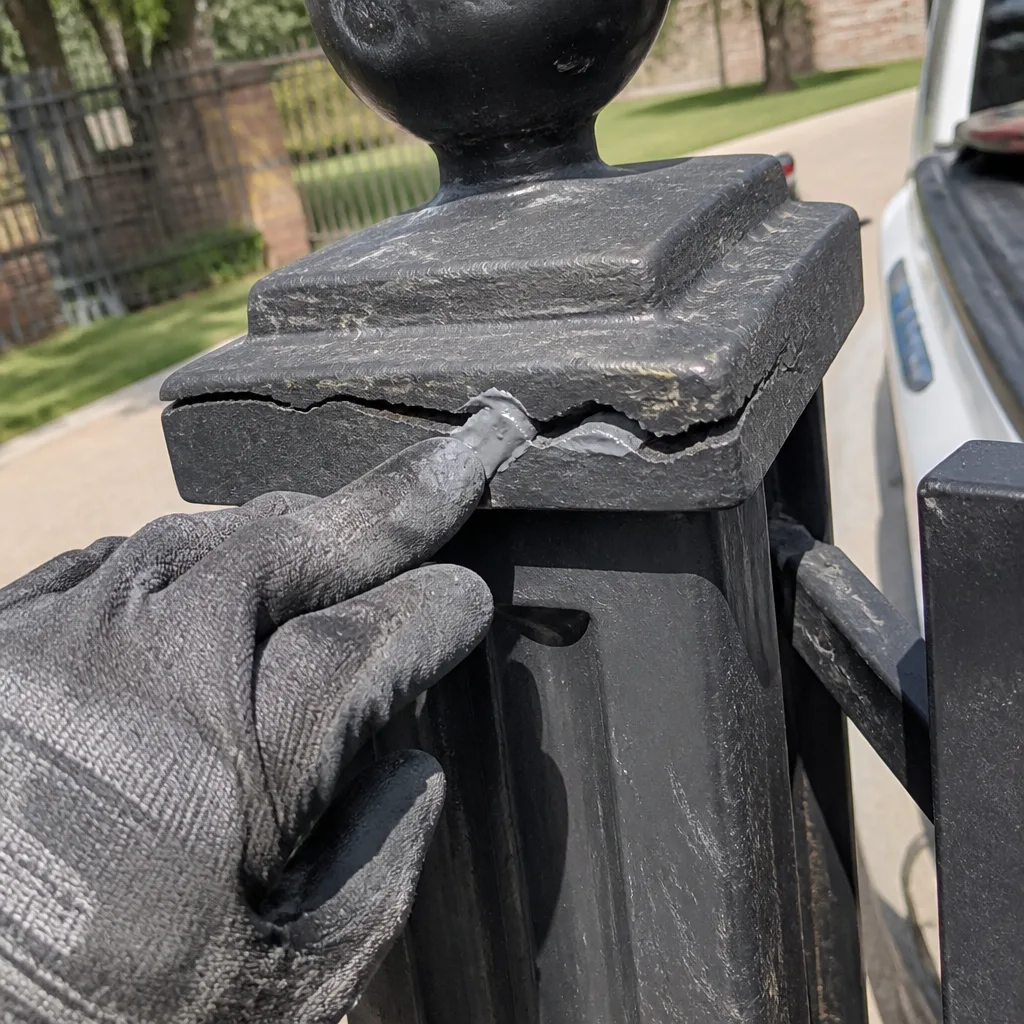
- Hinges and post brackets: $125-$450 per hinge including welding or re-setting the bracket. Failure looks like a gate that drags, a visible gap at the top hinge, or a gate that has to be lifted to latch. Mansfield clay accelerates this one because the post moves independently of the gate leaf.
- Gate operator (motor and arm): $300-$900 depending on brand, gate weight, and whether the arm bracket is intact. Failure looks like the motor running but the gate not moving, loud grinding, or the gate stopping halfway. Brands we work on regularly include Viking, Ghost Controls, DoorKing, and Elite, though we service nine major automation brands overall.
- Control board and electronics: $250-$750 installed. Failure looks like the gate not responding to remotes, intermittent operation, or the collision reverse triggering with nothing in the way. A bad board is often misdiagnosed as a bad motor.
- Safety loops and photo-eyes: $150-$400 per sensor or loop. Failure looks like the gate refusing to close, reversing immediately, or a loop that won’t hold the gate open for a vehicle. In Mansfield, loop failures spike after heavy rain soaks the driveway substrate and shifts the loop wire.
- Keypads, intercoms, and access hardware: $175-$550 installed. Failure looks like keypad codes not registering, intercom audio cutting out, or the receiver only working at close range. Sun exposure on a south-facing gate post shortens keypad life noticeably.
- Structural repair (post reset, steel repair, cantilever roller replacement): $800-$2,500 depending on steel weight, concrete volume, and access. Failure looks like a visibly leaning post, a gate that scrapes by inches, or a cantilever gate that binds in the rollers.
One note on pricing discipline: every one of these jobs gets a written flat price before work starts. No open-ended hourly billing, no “we’ll see when we get into it.” The price is based on what’s found during the diagnosis, and it’s handed over in writing before any tool touches the gate. That’s the only way a homeowner can compare a repair quote honestly. If you’ve ever had an invoice come back higher than the verbal estimate, you know why this matters.
Why Mansfield Soil Moves Gates: Post Lean, Heave, and Limit Switch Drift
Expansive clay is the defining engineering fact of North Texas construction. Mansfield sits on soil that can expand by 10 percent or more between dry and saturated states. A gate post set on a concrete footing sunk less than 24 inches deep, which is common on older properties, will move with that expansion cycle. The problem isn’t just that the post leans. The problem is that it moves seasonally: swelling in spring, shrinking in late summer, shifting fractionally each cycle, and never returning to exactly where it started.
Here’s the sequence we see repeatedly in Mansfield:
- The post begins to tilt outward or inward by a few degrees, pulled by the expanding clay against the shallow footing.
- The gate leaf, still rigid, transfers that tilt into the hinge geometry. The gate now swings on bearings that are no longer plumb.
- The operator, which was tuned when the gate was plumb, now reads increased resistance at the end of travel. The limit switch registers the gate as “closed” when it is actually still an inch or two short, or it pushes past and stalls.
- The motor works harder on every cycle. Heat builds. Windings degrade. Eighteen to twenty-four months later, the motor fails. The homeowner replaces the motor. The post is still leaning. The new motor fails on the same timeline.
The repair that addresses the symptom is a motor replacement. The repair that addresses the root is resetting the post in a deeper footing, sometimes with additional concrete mass and rebar, then re-hanging the gate and re-tuning the operator from zero. On a swing gate with a 14-foot leaf, the difference between a symptom fix and a root fix is roughly $500 in additional concrete and labor, and the difference in lifespan is measured in years, not months.
How do you know if your post has moved enough to matter? Check the gap at the latch. If the gate used to catch cleanly and now requires a push or a lift, that’s a sign. Check the hinge reveal. If the top hinge gap is visibly wider than the bottom, the post has rotated. Check whether the gate drifts on its own when open. A drift of more than a couple of inches means the gate is no longer hanging plumb, and that means the operator is fighting gravity every cycle.
Mansfield’s freeze-thaw cycles add another layer. Water that works its way into the concrete footing, through a crack or an old form tie hole, freezes during one of our January cold snaps and spalls the concrete. We’ve pulled footings in Mansfield where the top six inches of concrete had turned to gravel from repeated freeze cycles. The fix in those cases is a complete footing replacement, not a repair. The good news: a footing replacement is a one-time fix. The post doesn’t move again if the new footing is sized and sunk correctly.
UV-Degraded Wiring and Why Documentation Determines Whether You Pay Twice
Gate automation runs on low-voltage direct current: 12 or 24 volts DC on most residential systems. That wire is thin, jacketed in PVC or polyethylene, and frequently run exposed along fence lines or inside unshielded steel frames. Mansfield’s ultraviolet load is high enough that unprotected wire jackets last five to eight years before they start to chalk, crack, and fail. We replace sun-brittled wire on gates as young as six years old, particularly on south-facing and west-facing runs.
The failure pattern with UV-degraded wire is different from a mechanical failure. A hinge wears gradually. A wire fails intermittently. Here’s what that looks like in practice:
- The gate works fine in the morning and fails in the afternoon, when the sun heats the wire and expands the copper inside a cracked jacket.
- Safety sensors trigger randomly. A photo-eye circuit that intermittently loses continuity reads the same to the control board as something blocking the beam.
- The opener resets or loses its limits. A brief voltage drop on a degraded wire is enough for some boards to dump their travel settings and revert to factory defaults.
- The keypad works when it’s cool and not when the sun has been on it for four hours.
When these symptoms show up, the right repair is a re-run of the low-voltage wiring, done in conduit where the wire is exposed to sun, with documented splices. Which brings us to documentation.
The single biggest factor in whether a second repair call is necessary is whether the first technician left a wiring diagram. Here’s why: a gate operator system has multiple conductors feeding multiple devices, photo-eyes, a keypad, a safety loop, a receiver, and sometimes a push-button interior station. If that wiring was done in a single color, or spliced in the middle of a run, or re-purposed during a previous repair, the next technician has to reverse-engineer the entire system. That’s time. And time is what homeowners pay for on the second visit.
We’ve standardized on this: every visit where we touch wiring includes a hand-drawn diagram, left with the homeowner, showing every conductor color, every splice point, and every device connection. Plus photographs of the board before and after. That’s what Adrian Vance built coming out of commercial access-control work starting in 2014, where a control cabinet without accurate documentation was a liability. On a residential gate, the documentation habit pays off the first time a different company or a new homeowner has to understand the system. Under our Haven Standard, documented evidence comes with every job at no additional charge. This is also the Gate Motor & Opener in Mansfield work we do most often: re-wiring a system someone else installed without records.
Part-Number Discipline: OEM Boards vs. Universal Substitutes
A control board is the brain of the gate operator. It reads the travel limits, monitors the safety inputs, sets the motor current draw, and decides when to stop. OEM boards for brands like DoorKing, Elite, Viking, and Ghost Controls are engineered for the specific motor, the specific gear ratio, and the specific safety logic of the system they ship in. A universal board is engineered to fit as many systems as possible, which means it compromises on all of them.
The difference is measurable. An OEM board for a DoorKing 9150, to pick a model we work on regularly in Mansfield, is factory-programmed for that operator’s travel limits, force settings, and reverse sensitivity. A universal board has to be configured manually, and if the configuration is slightly wrong, the motor runs past its limit for a fraction of a second every cycle. That’s a few extra amps of current draw, a little more heat, a little more mechanical stress. The gate still opens and closes. It just wears out faster.
How to verify what’s installed:
- Ask for the part number. Every board has one printed on the PCB, usually near the transformer or the relay bank.
- Look it up. OEM part numbers match the operator manufacturer. A Ghost Controls board says Ghost Controls on it. A universal board says something generic, often nothing at all.
- Ask the technician whether the replacement is OEM or universal. Most legitimate technicians will tell you directly. If they hesitate, that’s the answer.
- Check the record. At minimum, the invoice should list the part number installed. If the invoice just says “control board” with no number, ask for the packing slip or the box.
We’ve replaced universal boards with OEM boards on gates that were two years past a previous repair, and the homeowner noticed the difference within a week: smoother stops, quieter operation, no more random reversals. The universal board wasn’t broken. It was just wrong. The $70 savings on the front end cost a couple hundred dollars in premature motor wear on the back end.
Part-number discipline extends beyond boards. Hinges, arms, photo-eyes, and even keypad enclosures have OEM versus universal variants. The question to ask is always the same: is this the part the manufacturer designed for this gate, or is it a part that fits well enough? For the structural hardware in particular, a hinge that fits “close enough” on a 900-pound gate is a hinge that will wear its mounting holes oval and transfer load to the post in ways the post wasn’t designed to handle.
Adjustment vs. Structural Repair vs. Replacement: Measurable Thresholds
One of the most expensive mistakes a homeowner can make is paying for a replacement when an adjustment would have solved the problem. The second most expensive is paying for adjustments for years when the gate needed structural work all along. Here’s how to tell the difference, with numbers you can measure yourself.
Adjustment territory:
- The gate drifts less than two inches when left open.
- The operator runs but stops slightly short or slightly past the latch.
- The photo-eye is misaligned and the gate refuses to close, but the eye housings are intact.
- The limit switch is out of tolerance by a few degrees. On most swing operators, this is a set-screw adjustment and a re-test, typically a $125 to $200 service call.
- The gate scrapes slightly at the latch post but lifts into place with minor force.
These are all repairs that should be billed as adjustments. The fix is measured in minutes, not hours, and the price should reflect that.
Structural repair territory:
- The post leans more than two inches out of plumb over four feet.
- The gate drags across the driveway more than an inch, leaving a visible scrape mark or wearing the wheel flat.
- The hinge welds or bracket bolts show visible fatigue: cracked paint at the weld line, elongated bolt holes, rust bleeding from inside the bracket.
- The gate has to be lifted more than a half-inch to engage the latch.
- The cantilever rollers bind or the gate is visibly racked.
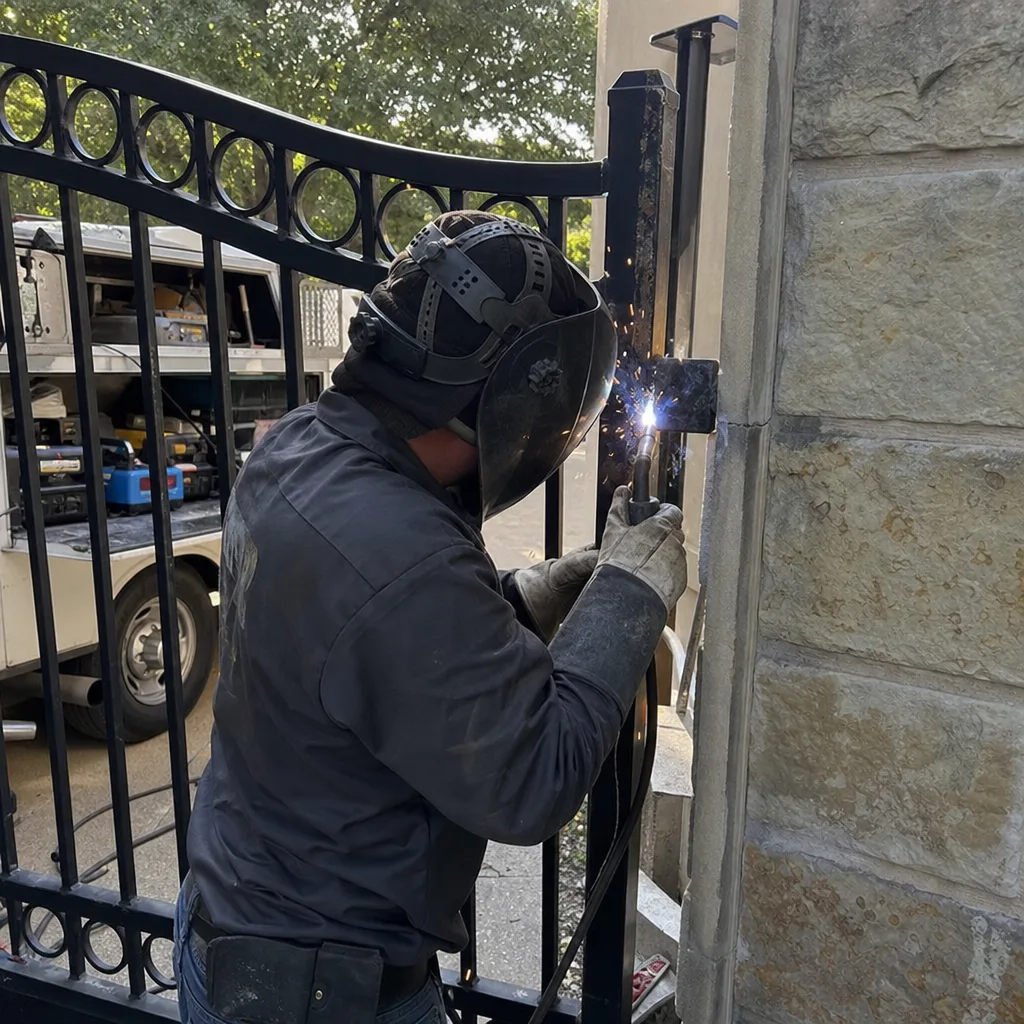
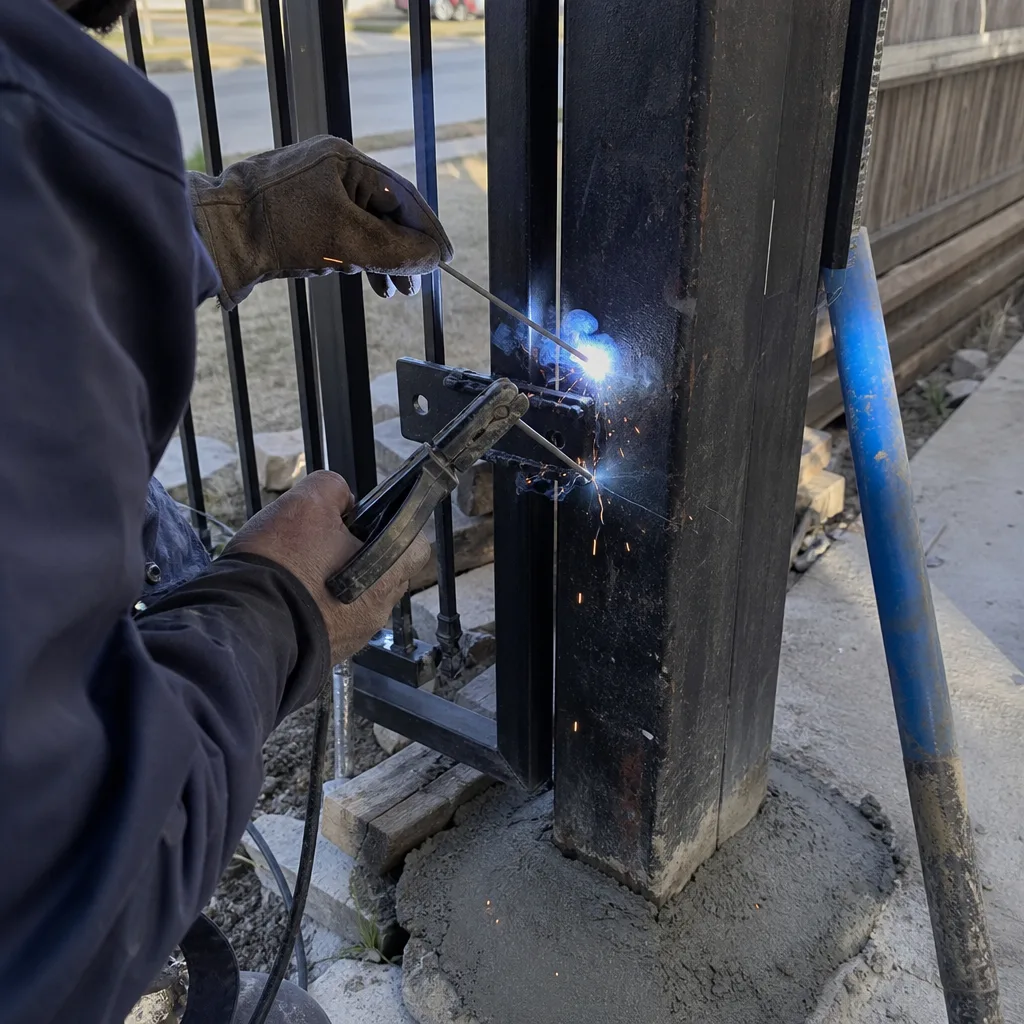
Structural repair means concrete work, steel welding, or both. The price goes up because the labor goes up, and because Mansfield soil work requires digging footings oversized enough to resist the clay’s expansion pressure. A 24-inch footing that worked fine for a decade might need to become a 36-inch or 42-inch footing if the original is cracked or shifting. This is also where Gate Repair in Mansfield work intersects with welding: a bent post bracket or a twisted hinge plate usually requires cutting and re-welding, not just re-bolting.
Replacement territory:
- The gate frame is rusted through, not surface-rusted. If you can push a screwdriver through the steel, the gate is beyond repair.
- The gate has been hit by a vehicle and the frame is bent more than a few degrees. A bent frame can rarely be straightened without compromising the steel’s fatigue life.
- The operator is fifteen or more years old, the control board has failed, and the motor windings are near the end of their life. Replacing one component on a system that age gets you a patch, not a fix.
- The post footing is cracked completely through, and the post is loose in the ground.
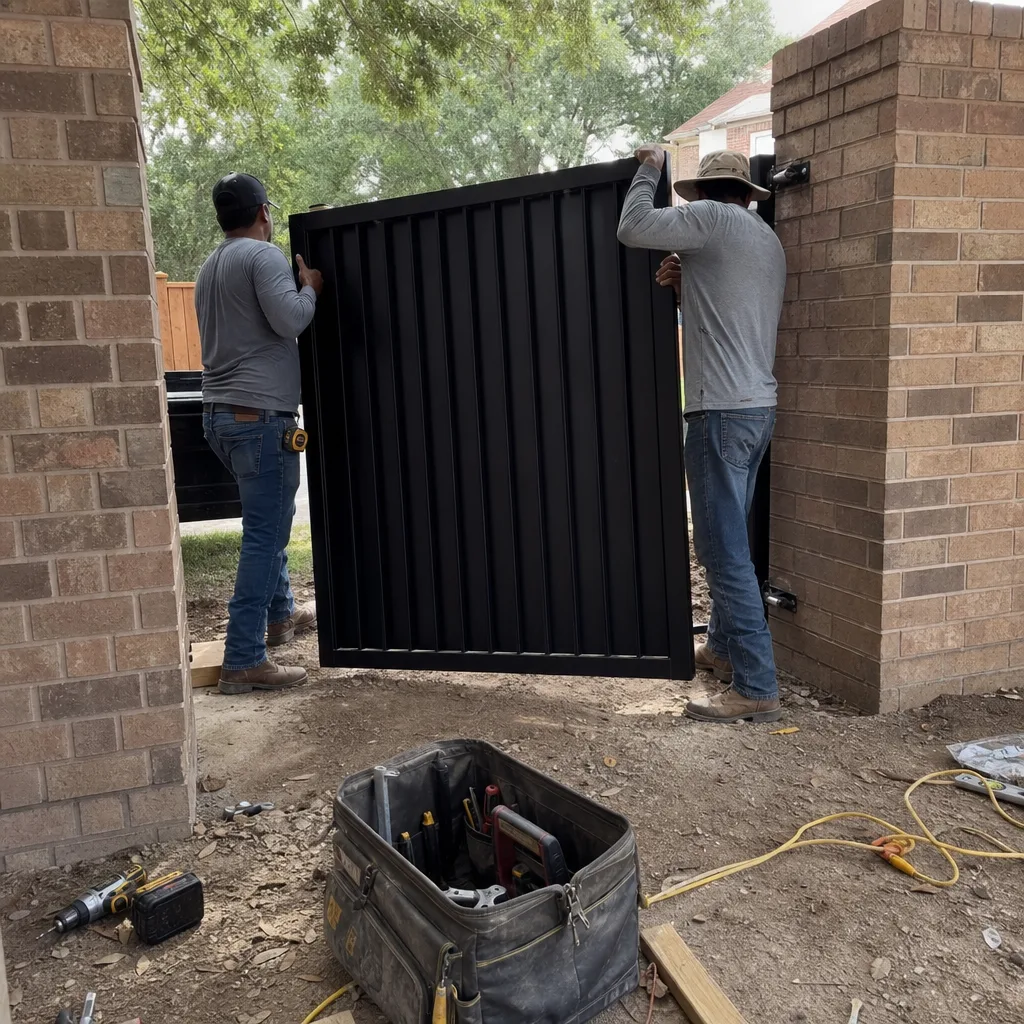
Replacement doesn’t always mean the whole gate goes to the scrapyard. Sometimes it means replacing the operator but keeping the gate leaf, or replacing the post but keeping the gate. The threshold is whether the remaining components have enough life left to justify the labor. A $250 hinge replacement on a gate that’s rusted through at the bottom rail is $250 wasted. A new gate on a post that’s still solid is often cheaper than you’d think, and when it’s time, we handle Gate Installation in Mansfield as a separate discipline from repair, with its own measured, scheduled process.
What You Can Check Yourself and What You Should Not Touch
You can diagnose a lot without ever touching a wrench. You should not, under any circumstances, attempt a DIY repair on a gate operator spring, a tensioned gate arm, or any component under mechanical load. Torsion springs on some slide gate systems store enough energy to remove fingers or break bones. A gate leaf that weighs 600 pounds can crush a person if it’s released from its travel stop incorrectly. We don’t say this to scare you. We say it because we’ve seen the consequences of well-intentioned DIY repairs that went wrong.
Here’s what you can safely check yourself, with the gate operator disconnected from power:
- Visual post check. Stand back and sight down the gate line. Is the post plumb? Use a four-foot level if you have one. More than an inch of lean over four feet is worth noting.
- Hinge movement check. Push the gate gently at the latch end. Does it rock on the hinges? A sixteenth-inch of play is normal bearing wear. A quarter-inch of play means the hinge or bracket needs attention.
- Wire jacket check. Look at any exposed low-voltage wire. If the jacket is chalky, cracked, or missing sections, that wire is on borrowed time.
- Photo-eye alignment check. Look at the receiver and transmitter. If they’re not pointed at each other, or if the housings are loose, that’s a likely source of intermittent failure.
- Limit behavior check. Run the gate through a full cycle using the wall button or remote. Does it stop cleanly at both ends, or does it labor, stall, or reverse unexpectedly?
What you should not touch: anything connected to a spring under tension, any control board with line voltage present, any wiring splice inside the operator housing, and any gate leaf that weighs enough to hurt you if it moves. Disconnect the power at the breaker and call someone. The highest-tension component on most residential swing gates is the operator arm, and on slide gates it’s the chain or belt tensioner. Both are professional territory, not because manufacturers want to protect service revenue, but because the failure mode is sudden and violent.
One more note for Mansfield specifically: if your gate is on a slope, the effective weight of the gate changes with the incline. A gate that’s easy to move on flat ground can be a lot harder to control on a slope. Most of the worst gate accidents we hear about in the metro happen on sloped driveways where the gate got away from someone. Treat a sloped gate with extra caution.
Common Mistakes to Avoid
- Replacing the operator when the post is the problem. A new motor on a leaning post just commits you to buying another motor in a couple of years. Check the post first. Mansfield clay is a slow, patient force, and it wins every time the post isn’t addressed.
- Accepting a verbal estimate without asking for it in writing. If the price isn’t on paper before the work starts, you’ve already lost the ability to hold anyone accountable to it. The written price before work begins is the first thing we hand over on any job.
- Using a universal control board to save short-term money. The savings evaporate the first time the operator misbehaves or the motor runs past its limit. OEM boards cost more for a reason.
- Ignoring intermittent sensor trips. A photo-eye that trips twice a week and “fixes itself” is a wiring or alignment problem that’s getting worse. Intermittent failures don’t heal. They become permanent failures at the least convenient time.
- Skipping the documentation after a repair. If you don’t have a written record of what was installed, what the part number is, and how the wiring is configured, the next repair starts from zero. You pay to rediscover what a piece of paper could have told you.
- Greasing a gate hinge with the operator still powered. This sounds basic, but a gate that cycles while you’re working on a hinge can take a finger. Disconnect the power every time, even for a quick visual check around moving parts.
- Assuming a rusty gate is a dead gate. Surface rust is not structural failure. A wire brush, a rust converter, and paint can extend a steel gate’s life by years. But rust at a weld line or bolt hole is a different story. Vance Gate Repair Mansfield home will give you a straight answer on which one you’re looking at.
When to Call a Professional
Call a professional when the gate is under tension, when the post has visibly moved, when the operator is making sounds it didn’t make last month, when the safety sensors are tripping without cause, or when you’ve already paid someone once and the problem came back. Those are all threshold conditions. The first three carry physical risk if handled wrong. The last one carries financial risk if handled wrong twice.
A gate that won’t close is also a security issue, not just a convenience problem. In Mansfield, an open gate means an open driveway, and an open driveway is an invitation. If you can’t secure your gate, call the same day. Vance Gate Repair Mansfield offers our Gate Repair services with free estimates in Mansfield, and a live person answers the phone 24/7 at (682) 564-0512. You’ll get a written price before any work starts, and a documented record when the technician leaves.
Frequently Asked Questions
Most gate repairs in Mansfield run between $125 and $450 for adjustments and sensor work, and $300 to $900 for operator and control board replacement. Structural repairs, such as resetting a post or welding a broken hinge bracket, typically run $800 to $2,500. Every repair we quote comes as a written flat price before work starts, so you’ll know the exact number before you decide. Call (682) 564-0512 for a free estimate, and we’ll put the price in writing.
Most repair work, including operator replacement, sensor realignment, and control board swaps, is completed the same day because we stock common parts for Viking, Ghost Controls, DoorKing, and Elite systems on our service vehicles. Structural repairs that require concrete work are scheduled. Call (682) 564-0512 and a live person will tell you what’s possible today.
In Mansfield, the most common reason a gate loses its limits is that the post has moved slightly in the expansive clay, changing the gate’s travel geometry. The second most common reason is a degraded low-voltage wire causing voltage drops that reset the control board. We check both on every limit-related service call and document what we find.
In Mansfield conditions, a quality gate operator installed on a properly set post typically lasts 8 to 12 years. On a leaning post or with sun-degraded wiring, lifespan can drop to 18 to 36 months. The post and the wiring matter more for longevity than the brand of the operator.
We service nine major gate automation brands, including Viking, Ghost Controls, DoorKing, Elite, LiftMaster, FAAC, BFT, Linear, and Mighty Mule. We repair what’s on the property rather than steering homeowners toward a replacement they don’t need.
A full service includes a diagnosis with documented findings, a written flat price before any work starts, the repair itself, and a photographic record of what was found, what was adjusted, and what was installed. That record stays with you and on file with us, so any future work starts from the documentation, not from a guess. Call (682) 564-0512 to schedule.
The Bottom Line
Gate repair in Mansfield is a soil problem as much as it is a mechanical problem. The expansive clay that shifts your gate post by a quarter-inch every season is the same force that burns out motors on a two-year cycle, throws limit switches out of adjustment, and cracks concrete footings. The wiring that bakes in 230 days of North Texas sun is the reason your gate works in the morning and fails in the afternoon. And the universal replacement part that saved $70 last year is often the reason a more expensive repair shows up this year. Fix the root cause, use the right parts, document everything, and demand a written price before anyone touches your gate. For more guides & resources on keeping your gate running smoothly, explore our blog. Those four habits eliminate most of the cost and frustration in this entire category.
Written by Adrian Vance, Owner at Vance Gate Repair Mansfield, serving Mansfield since 2014.