
Last updated September 20, 2026
Free on-site gate assessment - hinges, posts, and your LiftMaster or Nice gate operator checked before anything is quoted
The assessment is free and the quote is the invoice.



 Before
 After
After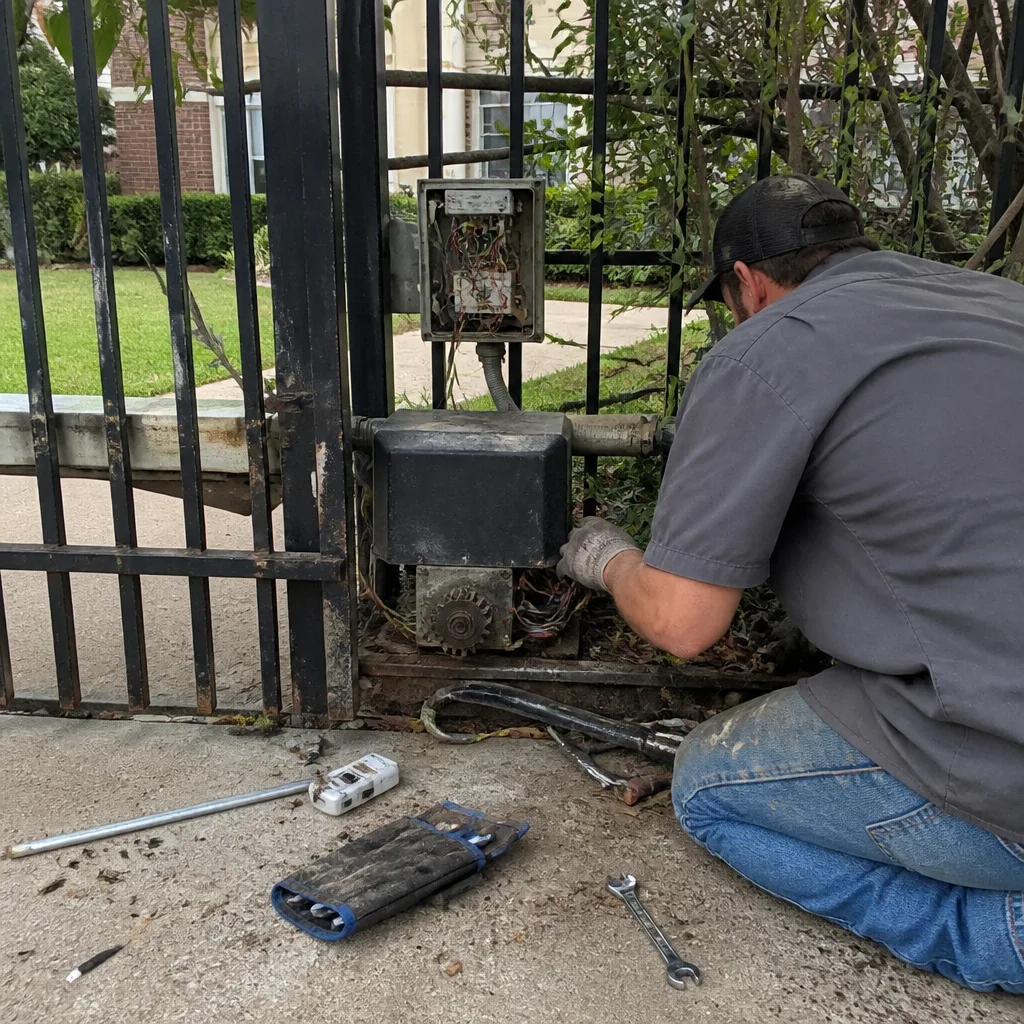 Before
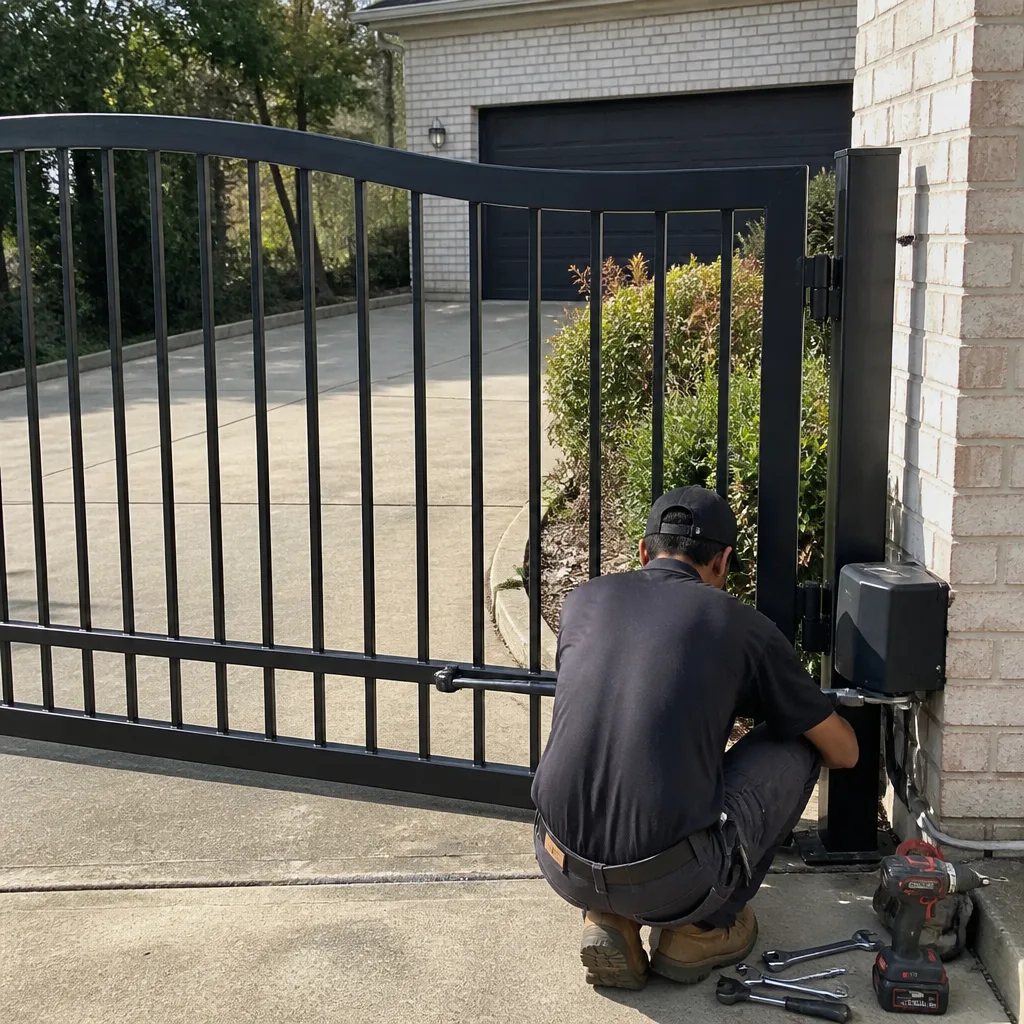 After
After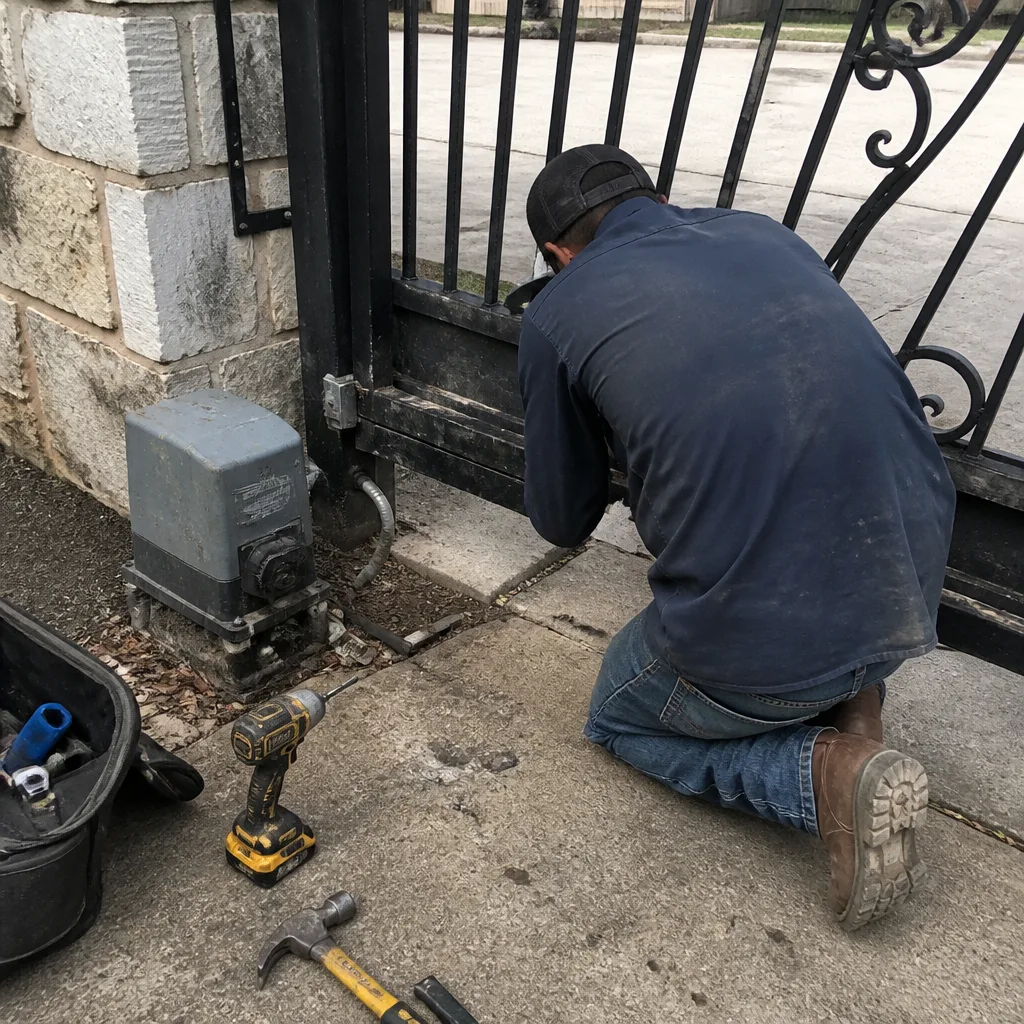 Before
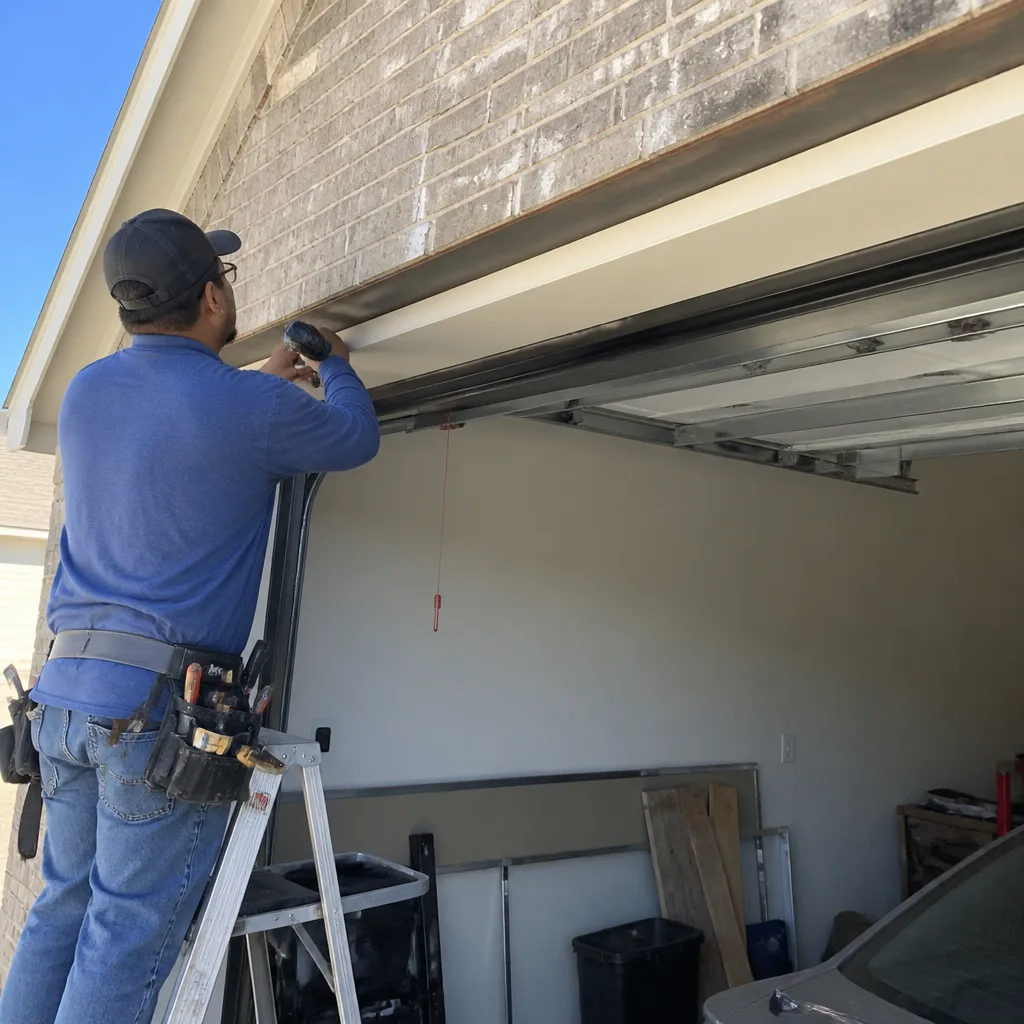 After
AfterDIY vs Professional Gate Repair: The Mansfield Homeowner’s Decision Guide
Here’s a number that should make any Mansfield homeowner pause before opening the gate-motor cover: a homeowner who replaces a control board without photographing the original wiring first has roughly a one-in-three chance of creating a new fault that costs more to diagnose than the board itself cost to install. The DIY-versus-professional question is rarely about whether you can turn a wrench. It’s about whether the repair requires system-level knowledge, and whether a mistake creates a problem the next technician has to reverse-engineer before the real repair can even begin. This guide sorts every common gate repair in Mansfield into one of three categories: safe DIY, risky DIY, and our Gate Repair services for professional-only work. By the end, you’ll know exactly which bucket your repair falls into, why, and what it costs to get it wrong.
Quick Answer
Most Mansfield homeowners can safely handle gate lubrication, hinge tightening, and remote programming as DIY tasks, as covered in our Gate Repair Maintenance Checklist for Mansfield Homeowners. Anything involving torsion springs, hydraulic rams, high-voltage wiring, or control-board replacement should go to a professional, because those repairs involve stored energy or diagnostic uncertainty that makes mistakes dangerous or expensive. The decision hinges less on your mechanical ability and more on whether the job carries system-level risk if done incorrectly.
Table of Contents
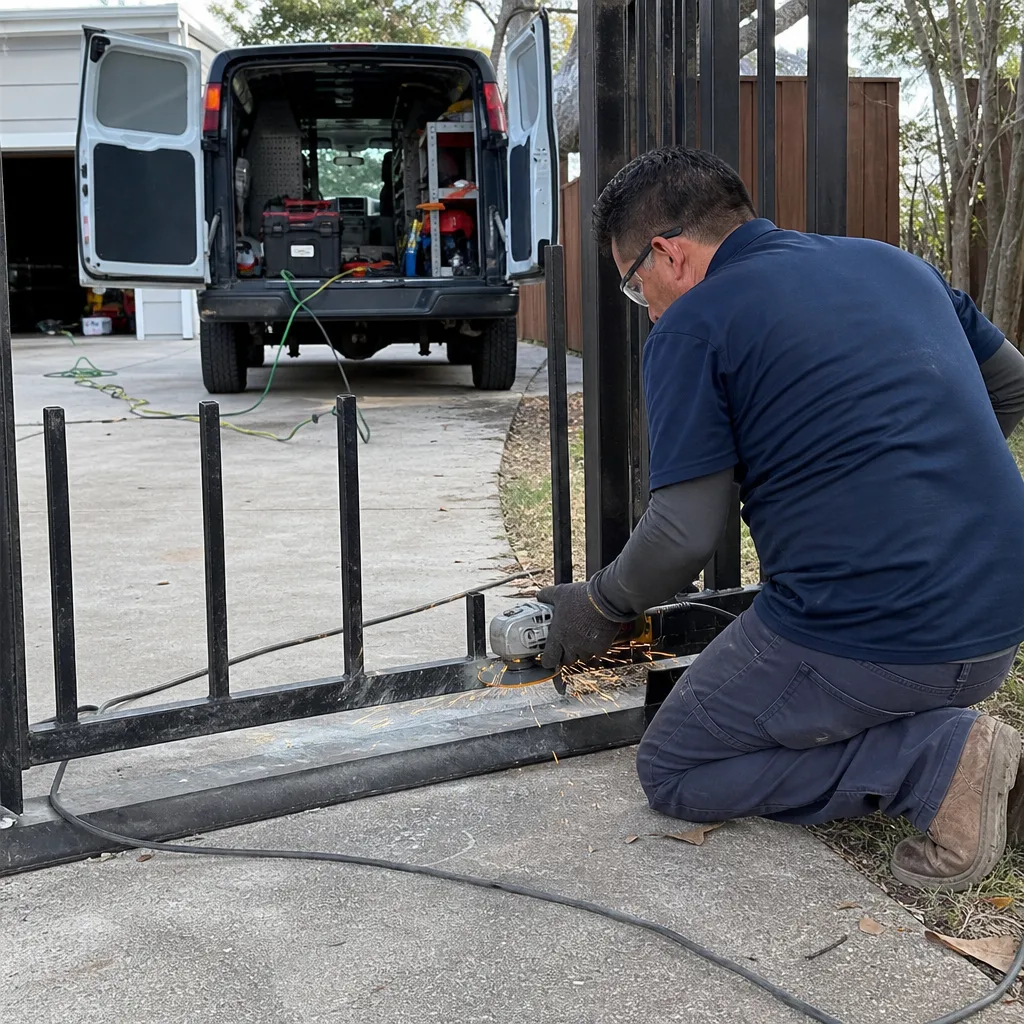
- Task-by-Task Classification Table
- Safe DIY Repairs: What You Can Handle
- Risky DIY Repairs: Proceed Only With Caution
- Professional-Only Repairs: Do Not Attempt These
- The Documentation Gap: Why Most DIY Gate Repairs Fail
- Stored Energy: The Danger Most Homeowners Don’t See
- When DIY Voids a Warranty or Raises Future Repair Costs
- The Three-Question Decision Framework
- Common Mistakes to Avoid
- When to Call a Professional
- Frequently Asked Questions
- The Bottom Line
 Before
 After
AfterTask-by-Task Classification Table
Here is the Gate Repair Cost Breakdown: The Mansfield Homeowner’s Reference for 2026. We’ve classified each common repair by risk level and included the reasoning, because a category label without a reason doesn’t help you make a decision.
| Repair Task | Classification | Reasoning |
|---|---|---|
| Lubricating hinges and rollers | Safe DIY | No stored energy or electrical exposure. A can of lithium grease and a rag. The worst outcome is over-lubrication, which attracts dust. |
| Tightening hinge bolts and bracket hardware | Safe DIY | Mechanical only. Use a torque wrench if the post is metal. Stop if the post pulls or cracks. |
| Re-programming an existing remote | Safe DIY | Manufacturer instructions are clear and the process resets without consequence. You’re not modifying wiring; you’re sending a code. |
| Photo-eye alignment | Risky DIY | Low physical danger, but misalignment of the infrared beam can make the gate refuse to close or reverse unpredictably. If you adjust it, photograph the original position first. |
| Limit switch adjustment | Risky DIY | Small turn of the screw, large change in gate travel. Set it wrong and the gate slams the post or stops a foot short. You need to know the manufacturer’s factory baseline. |
| Control board replacement | Professional-only | Live low-voltage wiring, model-specific firmware, and terminal mapping. Swap one wire position and you create a new fault. This is the number one DIY repair that arrives at our shop as a diagnostic mystery. |
| Torsion spring replacement | Professional-only | Stored mechanical energy. A torsion spring under load can release with enough force to break bones. Never attempt without spring-winding bars and the right training. |
| Post repair or re-setting | Professional-only | A leaning post means the gate’s weight is no longer distributed as designed. Digging and re-setting requires concrete, leveling, and often city or HOA code awareness in Mansfield neighborhoods. |
| Wiring repair inside the motor housing | Professional-only | Live terminals, ground faults, and no room for error. A shorted wire can destroy the control board and the transformer in one event. |
| Hydraulic ram service | Professional-only | Hydraulic systems hold residual pressure even when disconnected. A cracked line or the wrong fluid can ruin the pump. |
This table is your starting point. If your gate issue isn’t listed, keep reading, because the categories below explain the reasoning in detail so you can classify it yourself.
Safe DIY Repairs: What You Can Handle
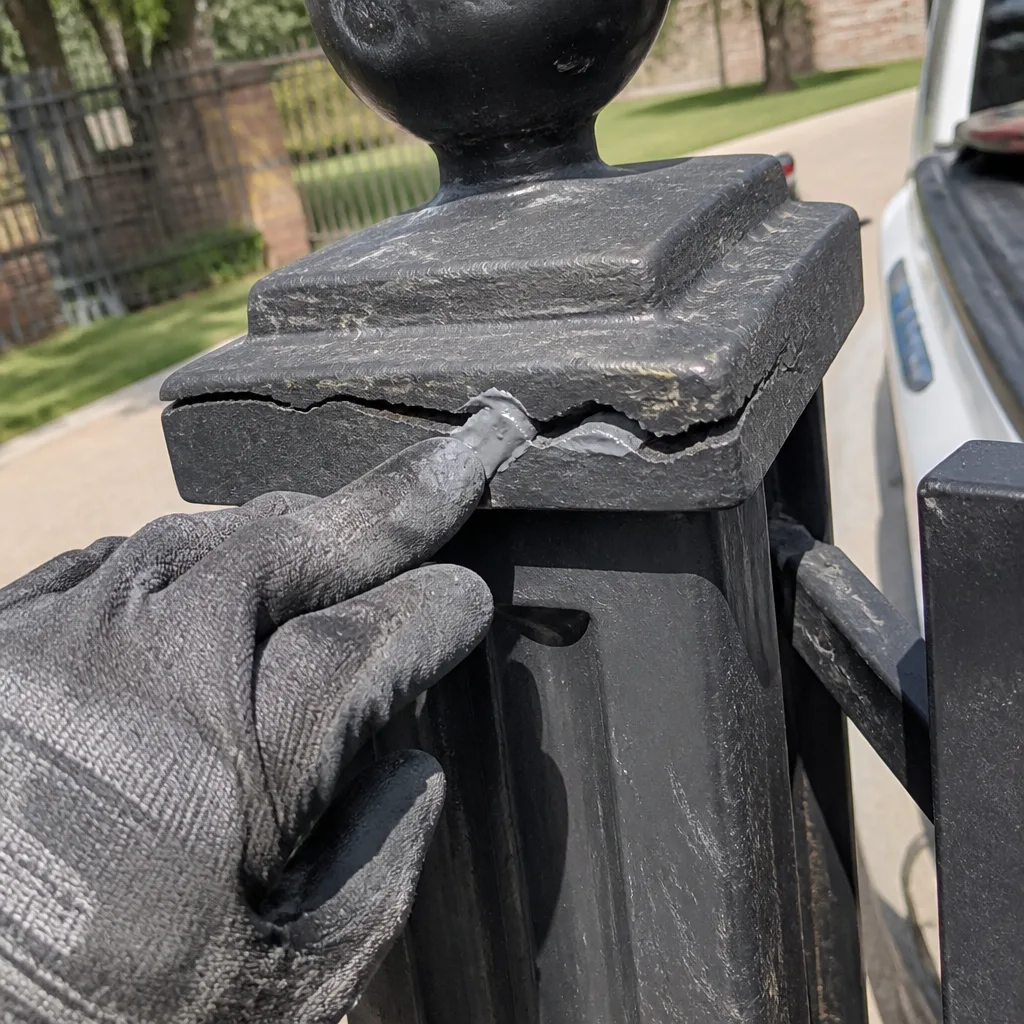
The gate repairs that stay within comfortable DIY territory in Mansfield share one trait: when you make a mistake, nothing breaks and nobody gets hurt. These jobs are mechanical or procedural, not electrical or structural. They require basic tools, take under an hour, and don’t involve any component under tension or load.
The first is lubrication. A gate that groans when it opens usually has dry hinges, dry rollers, or a dry chain. You can buy a can of white lithium grease or silicone spray at any hardware store in Mansfield for under ten dollars. Apply it to the hinge pins, the roller wheels, and, on slide gates, the chain. Do this twice a year, once before summer heat and once before winter, and you’ll prevent most wear-related noise. The only rule: don’t over-apply. Excess grease picks up North Texas dust and turns into a gritty paste that accelerates wear.
The second is tightening hardware. Gate hinges and bracket bolts work loose over time, especially on heavier wood or steel gates that swing hundreds of times a month. Walk around the gate with a socket set once a quarter and snug up any bolt that moves. If a bolt spins without tightening, the hole has wallowed out and you’re looking at a professional repair, not a DIY one. Stop tightening before you strip threads or crack a wooden post.
The third is remote programming. If your remote stopped working after a battery change or a new purchase, most brands have a simple learn-button sequence. LiftMaster, the most common motor on Mansfield gates, uses a purple or yellow learn button on the motor head. FAAC and BFT use dip-switch or menu-based programming. The manufacturer instructions walk you through it in five minutes. Nothing you do here can damage the motor, because you’re only syncing a code, not changing the board’s behavior.
One practical note for Mansfield homeowners: remote programming is the one area where YouTube tutorials are generally reliable. The sequences are standardized, and you don’t need to read a wiring diagram. That’s the hallmark of a safe DIY task: the instructions are linear, and the cost of a mistake is zero dollars.
Risky DIY Repairs: Proceed Only With Caution
Risky DIY repairs are the ones where a mistake doesn’t hurt you, but it creates a problem that’s more expensive to fix than the original repair would have been. These jobs are accessible to a careful homeowner, but only if you follow two rules: photograph everything before you touch it, and know the factory baseline for the component you’re adjusting.
Photo-eye alignment is the most common risky DIY job in Mansfield. The photo-eye, also called a photo-sensor or safety beam, is the infrared component that stops the gate if something crosses its path. On most Mansfield gates, the photo-eye sits near the bottom of the post, and the misalignment is usually small: two inches of drift caused by a bump from a car, or a weed trimmer knock, or a shifting post. When the photo-eye is misaligned, the gate usually won’t close or will reverse halfway through the cycle. The fix is physically simple: loosen the mounting bracket, re-aim the beam until the indicator light turns solid, and tighten. But here’s the catch: if you adjust it without noting the original position, and the alignment isn’t the actual problem, you’ve now added a variable. The next technician has to figure out whether the gate’s behavior is from the original fault or your adjustment. Our techs have spent hours in Mansfield driveways re-tracing a homeowner’s photo-eye adjustments before finding the real fault in a wire connection.
Limit switch adjustment is the second risky category. The limit switch tells the motor where the gate’s open and closed positions are. It’s usually a small plastic dial or screw on the motor head. Turn it half a rotation too far, and the gate slams against the post, shears a bolt, or stops twelve inches short of closed. The problem is that every brand has a different mechanism. A Viking limit switch doesn’t adjust the same way a BFT limit switch does, and an older Linear motor uses a magnetic collar that slides on a flat bar. If you don’t know your specific model’s adjustment method, you’re guessing. And guessing on a gate motor in Mansfield usually means a service call for a bent gate or a tripped breaker.
Here’s the profile of a risky DIY repair: you need to know the manufacturer’s specification, you need to document the starting position, and the consequence of error is financial rather than physical. If all three conditions are present and you’re comfortable with a camera and a manual, proceed. If any one of them is missing, don’t.
- Photograph the component before you touch it. Multiple angles, wiring visible, original position clear. These photos are your undo button.
- Find the manufacturer’s adjustment procedure for your exact model. Not a similar model. Your motor’s model number is on a label inside the cover.
- Make one adjustment at a time, and test after each. This isolates variables. If the gate behaves worse, you know what you changed and can reverse it.
- Write down what you adjusted and by how much. A notebook entry today saves a diagnostic fee next month.
Professional-Only Repairs: Do Not Attempt These
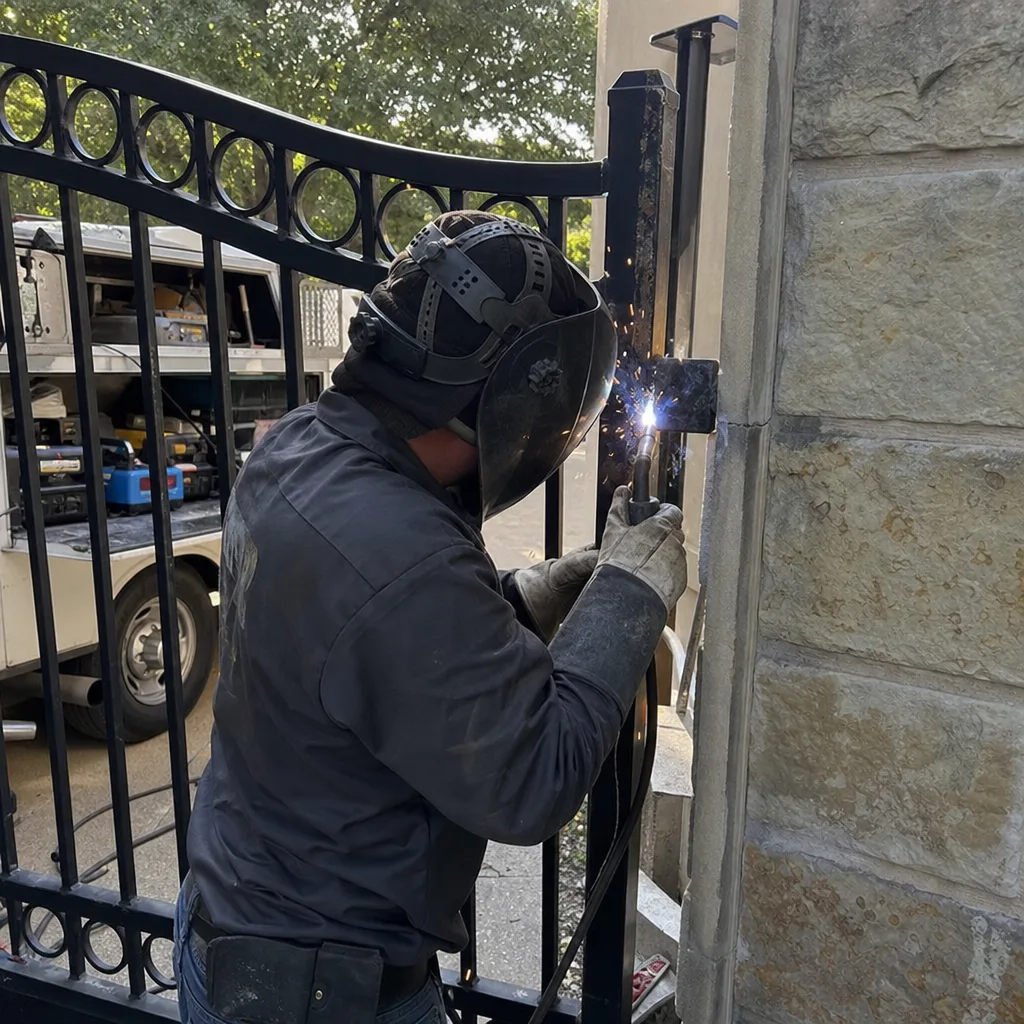
Some gate repairs in Mansfield should not be attempted by anyone without professional training and the right equipment. These jobs involve one of three things: stored mechanical energy, live electrical current, or a structural load. We’ll walk through each category so you understand exactly why these aren’t “advanced DIY” territory, they’re not DIY territory at all.
Stored mechanical energy. Torsion springs on overhead gates and some slide gates hold enormous tension. A single torsion spring on a residential gate can store hundreds of pounds of torque. When that spring releases suddenly, the winding bar becomes a projectile. Every year, homeowners are injured attempting spring replacement with improvised tools because a YouTube video made it look manageable. The difference in Mansfield isn’t the specific spring, it’s the load: our climate’s temperature swings create contraction and expansion cycles that can make a spring that looks loose actually be under partial load. You can’t see the load. Professionals use spring-winding bars, not screwdrivers, and they release tension in a controlled sequence.
Live electrical. Gate motors run on low voltage at the board level, but the power feed from your house is 120 volts, and it’s live unless you’ve properly isolated the circuit. Wiring repairs inside the motor housing involve both. A control board replacement means disconnecting and reconnecting a dozen terminal wires, each of which must land on the correct terminal or the board fries when power is restored. On a FAAC board versus a LiftMaster board, the terminal layout is different, the wire colors are different, and the programming is different. A homeowner who successfully swaps a board on a LiftMaster and then tries the same procedure on a BFT will likely short the board on power-up. This is the single most common DIY failure we see in Mansfield: a board replacement that went wrong because the wiring wasn’t documented before disconnection.
Structural load. A leaning post or a sagging gate means the structural support is failing. The gate’s entire weight, which on a wood-and-steel driveway gate can exceed 400 pounds, is now pulling on components that were never designed to bear it at that angle. Re-setting a post requires digging out the old footing, re-leveling, new concrete, and proper curing time before the gate can be re-hung. In Mansfield, where clay soil expands and contracts with rainfall, post movement is common. But fixing it properly requires understanding soil behavior, gate weight distribution, and often city code for fence and gate setbacks. This isn’t a weekend project; it’s a structural correction.
Our rule is simple: if the repair involves a spring, a hydraulic line, a live wire, or a post that’s out of plumb, the cost of a professional visit is a fraction of the cost of the mistake.
The Documentation Gap: Why Most DIY Gate Repairs Fail
Here’s the counterintuitive truth: most DIY gate repairs in Mansfield don’t fail because of technical complexity. They fail because the homeowner doesn’t create a record of what they changed. The repair itself might be a success in the moment. The gate opens and closes. The remote works. The problem is that six months later, when something else fails, the next person to open the motor cover sees a system that doesn’t match any wiring diagram or installation manual.
This is what we call the documentation gap. A professional technician leaves a paper trail: a work order, a photo log, a list of part numbers, a note about limit switch settings. A homeowner leaves nothing. When the gate breaks again, the next technician, whether that’s us or another Mansfield gate company, has to spend diagnostic time reverse-engineering what was changed. That diagnostic time is billable, and it’s often the difference between a $150 repair and a $400 one.
Real example from a Mansfield driveway: a homeowner replaced the capacitor on an older Viking motor. The gate worked. Four months later, the motor stopped responding to remotes but responded to the keypad. The homeowner called us. We opened the housing and found the capacitor had been wired with the polarity reversed, which worked initially because the capacitor was new, but degraded the motor output over time. The homeowner had no photo of the original wiring. We had to trace the circuit from scratch to determine what was wrong. The repair cost $330 and took two visits. If the homeowner had photographed the wiring before disconnecting, the repair would have been a one-visit, $180 capacitor swap.
The documentation gap applies to every category of gate repair. If you’re doing safe DIY lubrication, a note in your phone about the date and the product used helps the next maintenance visit. If you’re doing risky DIY limit adjustment, a photo of the original setting is non-negotiable. And if you’re doing professional-only work yourself, you’re not just risking the repair, you’re creating a situation where a future repair costs more because the diagnostic starting point is unknown.
At Vance Gate Repair Mansfield home, every visit ends with a photo log and written record. That habit, born under The Haven Standard, exists because we’ve seen the cost of its absence. Under Clause 4 of the Haven Standard, every visit includes a documented photo record at no additional charge. When you’re doing work yourself, replicate that habit: photograph before you touch, photograph after, and write down what you changed.
Stored Energy: The Danger Most Homeowners Don’t See
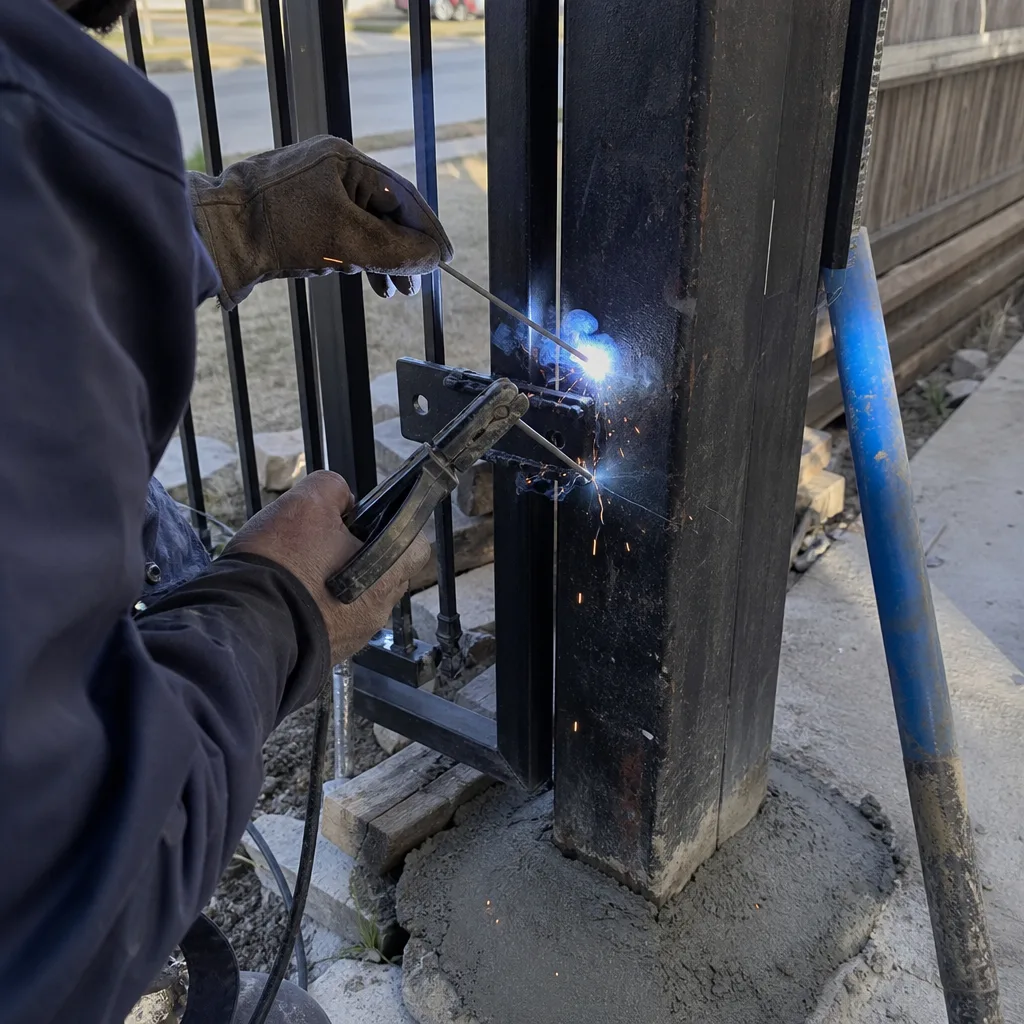
A gate that’s sitting still doesn’t look dangerous. That’s the trap. The danger in gate repair isn’t in the moving gate, it’s in the components that store energy even when the gate is at rest. Understanding where energy lives in a gate system is the single most important safety concept for any Mansfield homeowner.
Torsion springs. A torsion spring stores mechanical energy by twisting. The spring is under load even when the gate is fully open or fully closed. When a technician services a torsion spring, the first step is releasing that load in a controlled way. A homeowner who removes a spring bracket without releasing the load is standing next to a component that can release hundreds of foot-pounds of torque in a fraction of a second. The injury profile is severe: broken hands, broken wrists, facial impact from the winding bar.
Hydraulic systems. Hydraulic gate openers are less common in Mansfield residential applications than electromechanical motors, but they exist, especially on larger estate gates. A hydraulic ram contains fluid under pressure, and that pressure doesn’t dissipate when the pump shuts off. Disconnecting a hydraulic line without releasing residual pressure results in a high-pressure fluid spray. The fluid itself can inject into skin, causing a medical emergency that requires surgical attention. And the wrong replacement fluid, like mixing incompatible hydraulic oils, destroys the pump and the seals.
Capacitors. A capacitor stores electrical charge even after the power is disconnected. On a gate motor, the start capacitor can hold enough charge to deliver a painful shock. Professionals discharge capacitors before touching them. A homeowner who opens a motor cover and touches the capacitor terminals can receive a shock that, while rarely fatal, is enough to cause a fall and secondary injury.
Gate weight. Even without any mechanical components, a gate itself is stored energy in the form of gravitational potential. A 400-pound gate that slips off its track or comes off its hinge during a repair crushes whatever is underneath it. This is why post repairs and gate removal always require supporting the gate’s weight before unbolting anything.
The lesson for Mansfield homeowners is this: when you look at a gate repair, don’t ask “is the gate moving right now?” Ask “what is holding energy right now?” If the answer is a spring, a hydraulic line, a capacitor, or the gate’s own weight, that’s the moment to call a professional. The hazard isn’t the gate. The hazard is the stored energy you can’t see.
When DIY Voids a Warranty or Raises Future Repair Costs
Most gate motor manufacturers include language in their warranty documents that voids coverage if the motor has been serviced by someone other than a qualified technician. This isn’t boilerplate, it’s enforced. We’ve seen Mansfield homeowners denied warranty claims on LiftMaster and BFT motors because the manufacturer determined that a DIY repair damaged internal components. The warranty on a new gate motor is often three to five years, and losing it over a risky DIY repair is a steep price.
The warranty issue cuts two ways. First, the DIY repair itself voids the warranty on the component you touched. Replace a control board yourself, and the motor may no longer be covered for any subsequent failure, even a failure unrelated to the board. Second, the DIY repair can void the warranty on adjacent components. A limit switch adjusted incorrectly can cause the motor to overheat and burn out the transformer. The manufacturer sees the burnt transformer, asks whether the limit switch was serviced by an authorized technician, and denies the claim when the answer is no.
The deeper cost, though, is diagnostic uncertainty. When a professional follows a DIY repair, they can’t trust the system’s current state as a baseline. The wiring may be non-standard. The settings may be off-spec. The symptoms may be a combination of the original fault and the DIY changes. This diagnostic uncertainty is billable time. A professional knows how long a repair should take when the system is untouched. After a DIY attempt, that timeline is unknown, because the technician has to verify every connection and setting before diagnosing the actual problem.
We recommend a simple rule: if your gate motor is under warranty, call the installer or a qualified technician for anything beyond lubrication and tightening. If your gate motor is out of warranty, the calculus changes, but the risk profile doesn’t. The documentation gap and the stored-energy hazards are present regardless of warranty status.
One more thing worth mentioning: the 365-Day Done Right Promise that Gate Repair in Mansfield offers applies only to work we perform. A DIY repair that goes wrong doesn’t fall under anyone’s promise, because there’s no one to hold accountable but yourself. That’s not a sales pitch, it’s a structural fact: the reason professionals offer guarantees is that they can stand behind their own work. A homeowner can’t issue themselves a guarantee.
The Three-Question Decision Framework
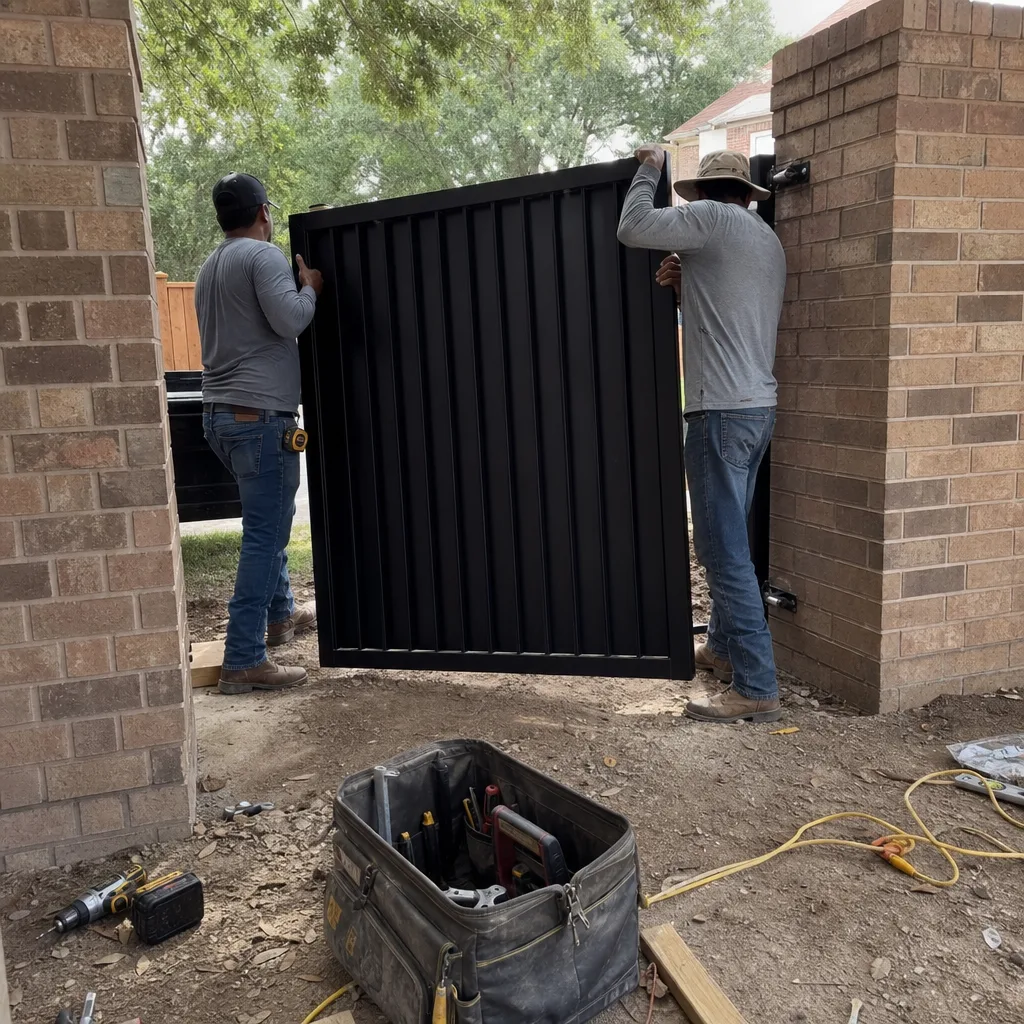
Before you start any gate repair in Mansfield, ask yourself these three questions. If you can answer all three honestly and affirmatively, the job is probably within DIY scope. If you hesitate on any one of them, the repair does not stay within DIY scope, and the better move is to pick up the phone.
Question 1: Can I see and document what I’m changing?
If the component is visible, accessible, and can be photographed before and after, you’re in good shape. If the component is inside a sealed housing, behind a panel, or buried in wiring, you can’t document the starting state. Without a documented starting state, you can’t reverse your work. This single question eliminates most control board work and any wiring repair. If you can’t photograph it clearly, you can’t DIY it safely.
Question 2: Is the component holding energy even when the gate is still?
We covered this in the stored energy section, but the framework version is simple. If the component is a spring, a hydraulic line, a capacitor, or anything under tension or pressure, the answer is yes, and the job is professional-only. If the component is a bolt, a hinge, a roller, or a piece of hardware, the answer is no, and you can proceed. The energy question is binary, and it overrides every other consideration. No amount of skill makes a torsion spring safe to work on without the right tools and training.
Question 3: If the repair fails, what does failure cost?
This is the question most homeowners skip. If a lubrication job fails, the cost is a squeaky gate. If a remote programming attempt fails, the cost is a remote that still doesn’t work. If a control board replacement fails, the cost is a fried board, a possible damaged transformer, a warranty voided, and a diagnostic fee to untangle the damage. Ask yourself: what’s the worst realistic outcome, and how much does that cost to fix? If the answer is under $50 and a do-over, proceed. If the answer is hundreds of dollars and a professional visit, the DIY attempt wasn’t going to save you money in the first place.
These three questions work for any repair, not just gates. They work for your garage door opener, your irrigation controller, your pool pump. But on a gate, the stakes are higher because the system is outdoor, load-bearing, and security-adjacent. A gate that fails also fails as a boundary for your property. That’s the added variable in Mansfield: a broken gate isn’t just an inconvenience, it’s a hole in your property’s perimeter.
Common Mistakes to Avoid
- Watching one YouTube video and treating it as training. A single video shows one motor model on one gate type. Your Mansfield gate may be a different brand, a different voltage, or a different configuration. Watch three videos, read the manual for your specific model, and if the instructions conflict, stop.
- Using a screwdriver as a spring-winding bar. Torsion springs require round steel bars sized to the spring’s winding cone. A screwdriver will slip, and when it slips, the energy releases through your hand. Never improvise tools on a component under load.
- Adjusting limit switches without marking the original position. Limit switches have a factory baseline. If you turn a screw without knowing where it started, you can’t return to the starting point when the adjustment doesn’t work. Mark it, photograph it, write it down.
- Disconnecting control board wires without labeling them. Ten wires look identical when you’re reconnecting them. A phone photo taken before disconnection is your reference, but only if you actually take it before touching anything.
- Ignoring a gate that’s starting to sag. A sagging gate is a structural problem that gets worse with every open-close cycle. The longer you wait, the more the post pulls, the more the hinges wear, and the more expensive the eventual repair becomes. Mansfield’s clay soil means a sagging gate won’t recover on its own.
- Assuming all gate motors are the same. A Viking and a Linear and a BFT motor all look similar from the outside. Inside, the wiring, programming, and adjustment mechanisms are different. Don’t apply one brand’s instructions to a different brand’s motor.
- Drilling into a gate post without locating utilities. In Mansfield, underground utilities can run within a few feet of a gate post. If your DIY post repair involves digging, call 811 first. It’s free, and it prevents a gas or electrical line strike.
When to Call a Professional
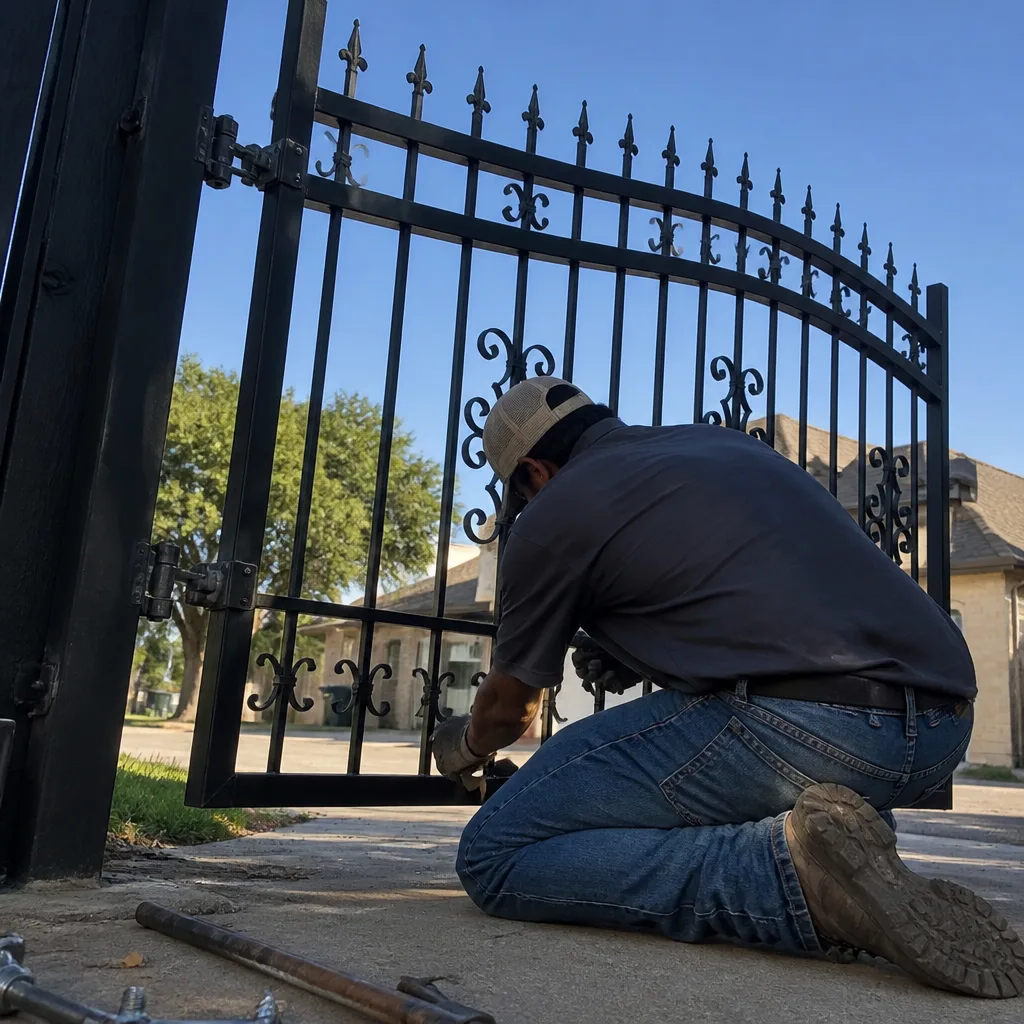
You can lubricate hinges, tighten bolts, and program remotes yourself. The moment the repair involves a spring under tension, a hydraulic line, a live wire, a control board, or a post that’s out of plumb, call a professional. In Mansfield, a gate repair that requires system-level knowledge is not a project, it’s a safety decision. For a gate motor that’s behaving oddly, gate access control that’s failing, or a fence gate that’s pulling off its hinges, Gate Installation in Mansfield covers both new builds and structural corrections. For anything involving the motor itself, Gate Motor & Opener in Mansfield covers diagnosis and repair across every major brand. Vance Gate Repair Mansfield offers free estimates in Mansfield - call (682) 564-0512 and a live person answers, 24 hours a day.
Frequently Asked Questions
A safe DIY repair like lubrication costs $10 to $30 in materials. A risky DIY repair that goes wrong often costs more to correct than the original professional repair would have cost, because the next technician has to diagnose both the original fault and the DIY changes. In Mansfield, a professional gate repair typically ranges from $180 to $400 depending on the component, and that price is quoted in writing before work starts. Call (682) 564-0512 for a free estimate on your specific repair.
Yes, in most cases a technician can diagnose and repair a gate motor on the same visit. Parts may take longer if the motor requires a non-stock component, but the diagnosis and written price happen on arrival.
A full gate repair includes diagnosis, the written price for parts and labor before work starts, the repair itself, a post-repair test of the gate’s full travel cycle and safety systems, and a documented photo record of everything that was found and changed. The written price requirement is part of The Haven Standard, and it applies to every job regardless of size.
Yes, power runs, photo-eyes, safety edges, and all wiring are included in the scope of a new gate installation. Gate Installation in Mansfield covers the full electrical and safety system integration.
Usually yes. Most manufacturers including LiftMaster, BFT, FAAC, Viking, and Linear void the warranty if the motor or board was serviced by someone other than a qualified technician. If your gate motor is under warranty, stick to lubrication and tightening as your DIY scope, and call a professional for anything electrical or mechanical.
Apply three questions: can you see and photograph the component, does the component hold energy when the gate is still, and what does failure cost? If you can document it, it holds no energy, and failure costs under $50, proceed. If any answer is no, call a professional. Call (682) 564-0512 and describe the symptom, a live person answers 24/7.
The Bottom Line
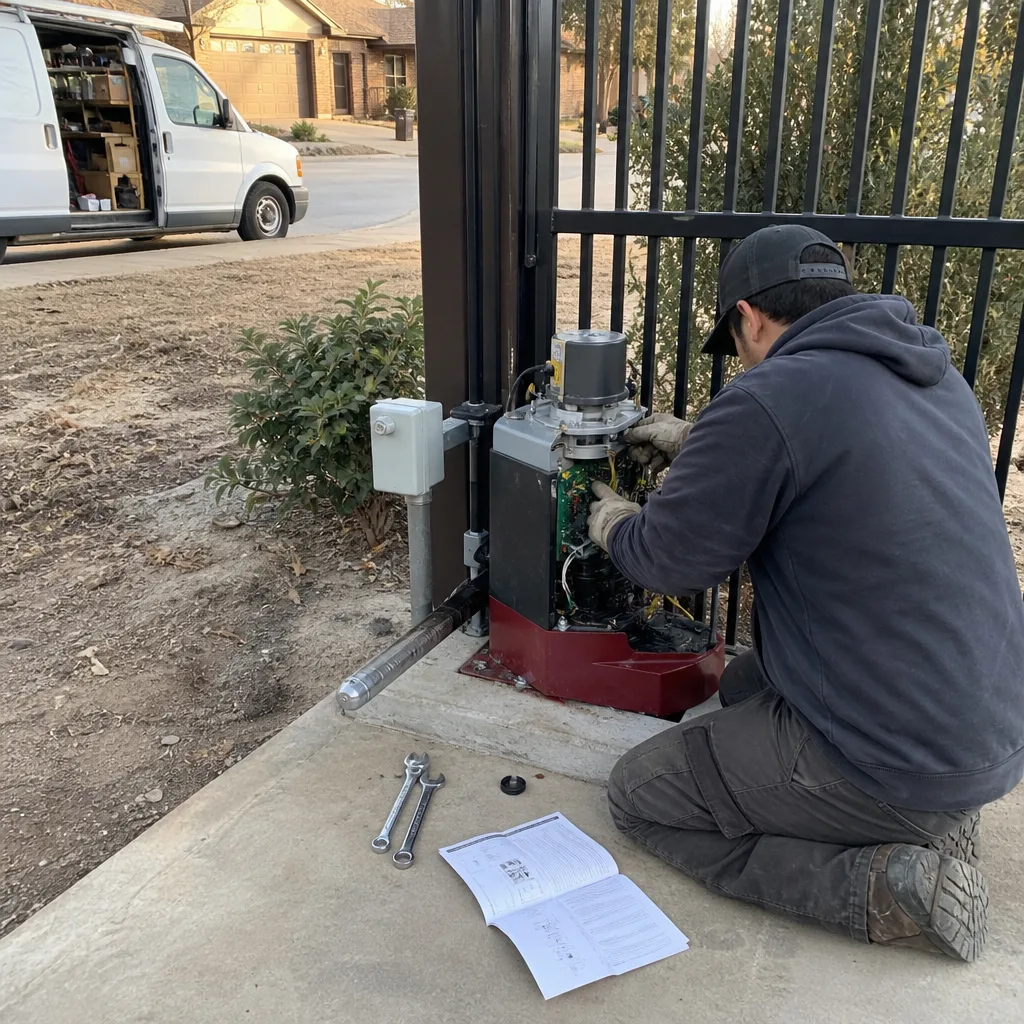
The DIY-versus-professional decision for gate repair comes down to system risk, not skill. Mansfield homeowners can handle lubrication, hardware tightening, and remote programming without concern. Risky DIY jobs like photo-eye alignment and limit switch adjustment require documentation and manufacturer knowledge to do safely, and they still carry a financial risk if the adjustment is wrong. Professional-only jobs involving springs, hydraulics, live wiring, control boards, and structural posts should never be attempted without training. The three-question framework, the documentation habit, and an honest assessment of failure cost will tell you which category your repair falls into. When in doubt, call (682) 564-0512. A live person answers, and the estimate is free.
Written by Adrian Vance, Owner at Vance Gate Repair Mansfield, serving Mansfield since 2014.