
Last updated September 20, 2026
Free on-site gate assessment - hinges, posts, and your LiftMaster or Nice gate operator checked before anything is quoted
The assessment is free and the quote is the invoice.
 Before
 After
After Before
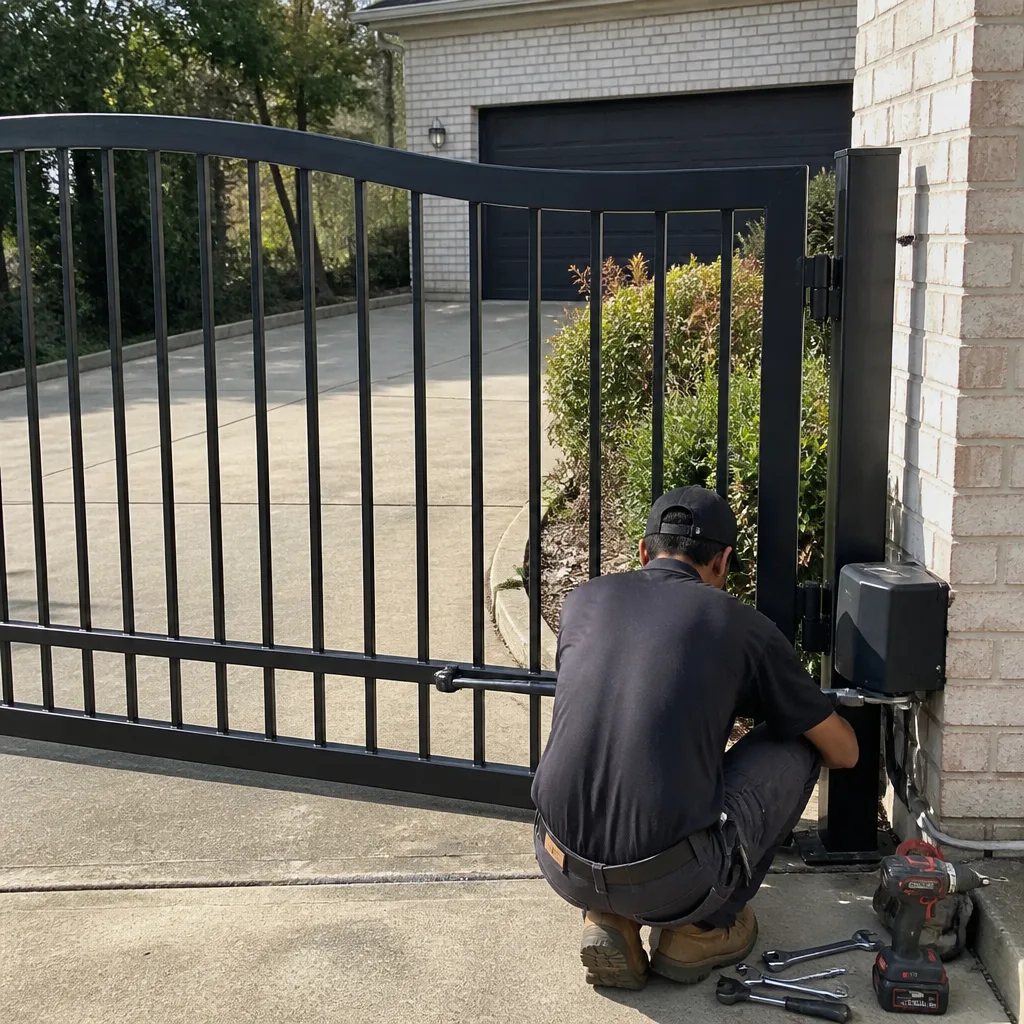 After
After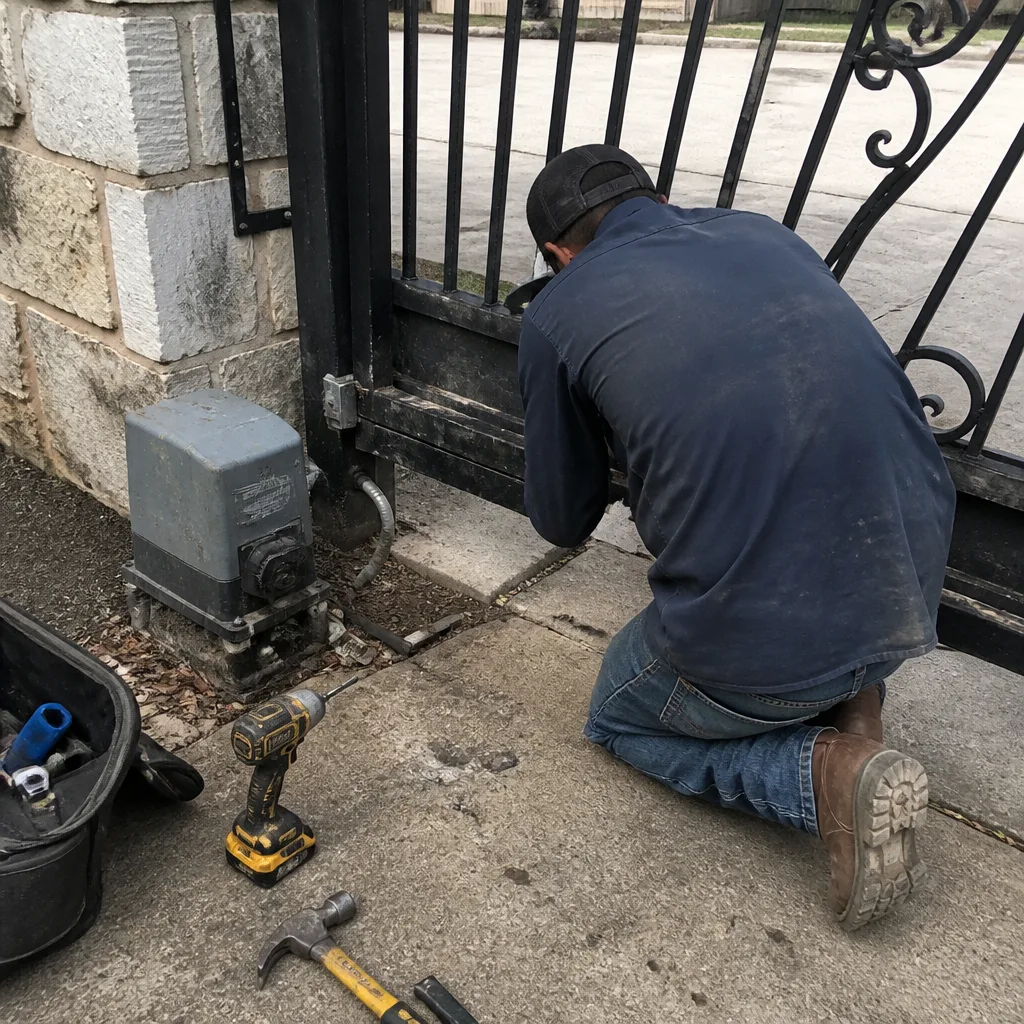 Before
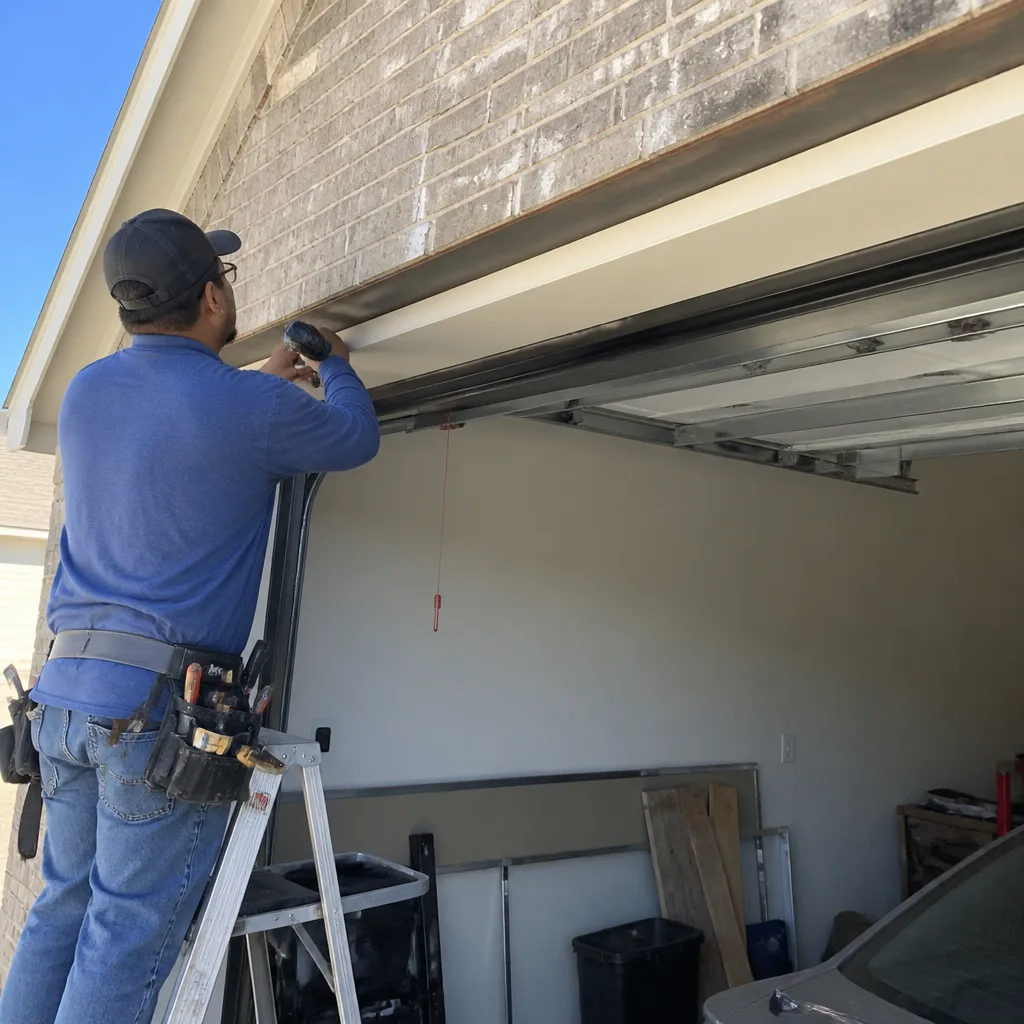 After
AfterSeasonal Gate Repair Care for Mansfield: Year-Round Homeowner’s Guide
In a Mansfield summer, a control board enclosure on a west-facing fence can reach 140°F, a temperature that degrades standard wire insulation faster than three years of normal cycling would. Most gate care advice assumes a generic four-season climate, but Mansfield doesn’t wear a gate evenly. Summer heat attacks electronics and wiring while the posts stay put. Winter freezes move the posts and leave the electronics alone. If your maintenance calendar treats every season the same, you’ll be replacing a motor in March that failed because of what July did to it. This guide lays out what actually fails in Mansfield and when, month by month, so you can catch problems before they strand a vehicle in the driveway or leave the gate hanging open.
Quick Answer
Seasonal gate care in Mansfield means matching maintenance to the failure pattern: protect electronics and wiring from June through September heat, inspect posts and hardware after January freezes, realign the gate every spring after soil movement, and photograph a baseline in October before the freeze-thaw cycle begins again. A homeowner can handle monthly visual checks in about 20 minutes, but any adjustment to motor limits, hydraulic pressure, or post footings belongs with a technician who works on gate automation daily.
Table of Contents
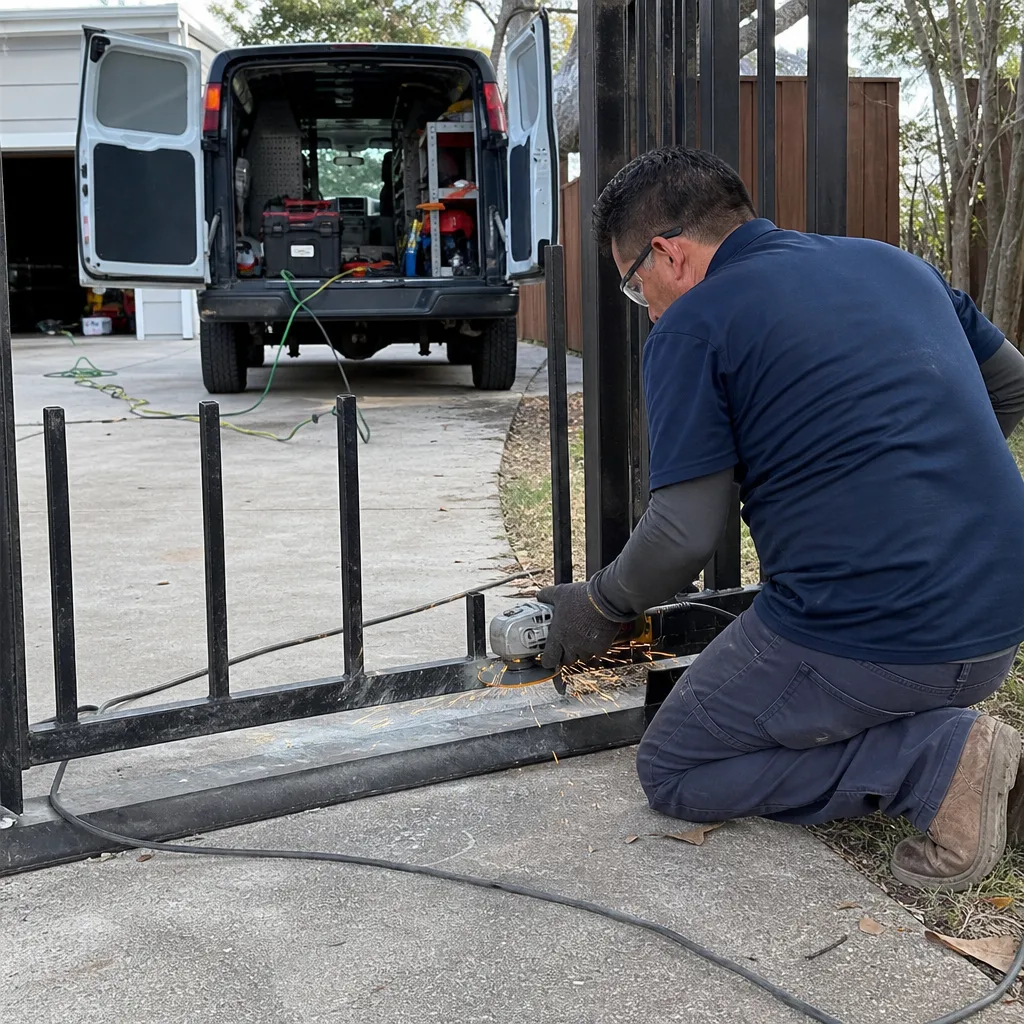
- Why Mansfield Weather Breaks Gates Differently
- Summer (May-September): Heat Load on Electronics and Wiring
- Fall (October-November): Baseline Photography and Pre-Freeze Prep
- Winter (December-February): Freeze-Thaw Cycles and Hardware Stress
- Spring (March-April): Soil Movement and Motor Overload Season
- Month-by-Month Mansfield Gate Care Reference
- Signs You Should Not Ignore in Any Season
- Common Mistakes to Avoid
- When to Call a Professional
- Frequently Asked Questions
 Before
 After
AfterWhy Mansfield Weather Breaks Gates Differently
Mansfield sits in a climate band that punishes gate systems from two directions. Summer brings sustained triple-digit days with high UV exposure, and the heat doesn’t just warm the air, it cooks whatever sits in direct sun. A dark metal control box mounted on a west-facing fence absorbs solar radiation all afternoon. The air temperature might read 102°F, but the inside of that enclosure can reach 140°F or higher, and at that temperature, standard PVC wire insulation hardens and cracks. Capacitors on control boards swell. Battery backups lose capacity permanently. The gate still cycles, so nothing seems wrong until the system fails at the worst moment, typically during a July afternoon when the sun is still hammering the box.
Winter in Mansfield is shorter but harder on the gate’s skeleton. The area sees cold fronts that push temperatures below freezing for a night or two, then back into the 50s within days. Water seeps into hairline cracks in concrete footings and around post bases, freezes and expands, then thaws and drains. Repeat that cycle a dozen times from December through February and the post shifts by fractions of an inch each time. A gate that swung cleanly in November drags on the latch side by February, or an operator that used to cycle in 12 seconds now takes 20 because it’s fighting a misaligned hinge line. The damage isn’t dramatic. It’s the slow, measurable kind that shows up in a spring motor burnout.
Spring is when the soil moves most. Clay-heavy North Texas ground swells after winter rains and then contracts as temperatures climb. That movement lifts and settles posts unevenly, and it’s the single biggest reason we’ve seen motor overloads spike in March and April across Mansfield. The motor didn’t fail because it was old. It failed because it spent six weeks pushing against a gate that was no longer sitting level on its hinges.
Our Gate Repair in Mansfield page covers what a full diagnosis looks like when one of these seasonal failures puts your gate out of service. For now, the rest of this guide walks through each season’s specific care tasks.
Summer (May-September): Heat Load on Electronics and Wiring
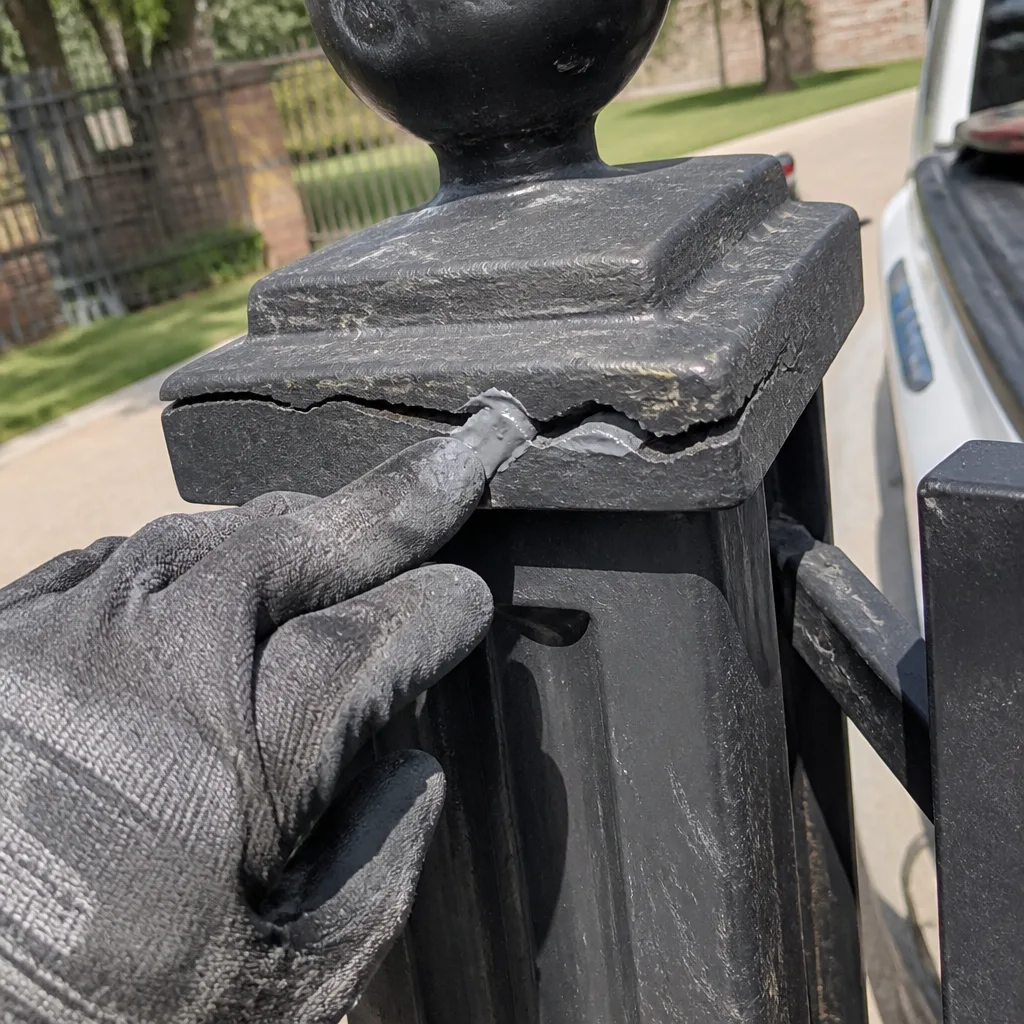
Summer in Mansfield is when you protect the electrical half of the system. The gate’s physical hardware, posts, hinges, weld joints, doesn’t care much about 105°F. Steel and aluminum expand slightly, but nothing moves enough to matter. The control board, the transformer, the battery backup, and every inch of low-voltage wiring running between them care deeply. Heat shortens their life, and UV breaks down any plastic component left exposed.
What to check monthly during summer:
- Control box temperature: Put your hand on the enclosure in mid-afternoon. If it’s too hot to hold for five seconds, the board inside is running above its rated range. Adding a shade panel or relocating the box to the shaded side of the fence is cheaper than replacing a board.
- Enclosure ventilation: Many Mansfield installs have sealed plastic boxes. Drilling proper vent holes at the bottom and top, with a screen over each, drops internal temperature 20-30°F through simple convection. This is a quick job but must be done so rain can’t enter from above.
- Wire insulation at exposed sections: Look for any wiring that exits a conduit and runs along a fence rail. UV breaks the outer jacket in two to three Mansfield summers. Cracked or chalky insulation means water entry points and a future short.
- Battery backup health: If your opener has a battery backup, July is when it suffers. Heat accelerates internal corrosion. A battery that holds a charge fine in May may hold ten minutes by September. Openers with battery backups should have the battery tested each August.
- Solar gate operator panels: If you run a solar-powered operator, wipe the panel face monthly during summer. Dust, pollen, and heat film reduce output by 10-20%, and the panel is the only thing powering the gate.
One Mansfield-specific detail we see regularly: conduit that was installed correctly, with UV-rated PVC, still fails at the connectors because the glue joints crack under thermal cycling. The pipe itself is rated for the sun. The glued joints are the weak point. If you see a joint that has separated by even a quarter inch, that’s an ant highway and a water path into your system.
If you have an opener from FAAC or LiftMaster, the summer checklist doesn’t change much; what changes is the cost of ignoring the heat. Replacement control boards for those brands run from $350 to $900 installed, compared to a shade panel that costs under $100 and an hour of labor. We’d rather install the shade panel in May than the board in August. That’s the summer calculus for any Gate Motor & Opener in Mansfield.
Fall (October-November): Baseline Photography and Pre-Freeze Prep
October is the most underrated month on the Mansfield gate care calendar. In October, the gate is usually functioning normally, the weather is mild, and the winter freeze hasn’t started moving anything yet. That makes it the right time to photograph a baseline: the gate’s closed position, the gap at the latch, the gap between gate and post at three heights, and the position of the gate relative to the stop. Ten minutes with a phone camera in October will show you exactly how much things moved by February.
Why the baseline matters: Freeze-thaw movement is incremental. You won’t notice a quarter-inch of post settlement in December, and you won’t notice it in January. But a quarter-inch in December plus a quarter-inch in January plus an eighth in February is a visibly dragging gate by March, and you’ll wonder when it happened. The October photos answer that. They also give any technician a reference point for what the gate looked like when it was right. At Vance Gate Repair, we photograph every gate we service on every visit, and the most useful photos are always the ones taken before anything broke.
Fall maintenance tasks before the first freeze:
- Photograph the gate in its closed position from the latch side, hinge side, and straight on. Get close enough that the gap between gate and post is visible.
- Lubricate hinges and wheels with a dry lubricant or white lithium grease. Don’t use WD-40 as a lubricant; it’s a water displacer and will strip existing grease from hinge pins.
- Check for exposed metal on the gate frame, welds, and post bases. Any bare steel should get a rust-inhibiting primer and touch-up paint before winter moisture arrives.
- Test the safety edges and photo-eyes now, not in January. A photo-eye is the infrared beam that stops the gate if something crosses the path. Cold weather doesn’t fix a misaligned beam; it just makes you less willing to stand outside adjusting it.
- Drain the low spots around post bases. If water pools against a post, freeze-thaw will work on the concrete with hydraulic force. Regrade or add drain rock so water moves away.
Fall is also when to handle any repair from the summer you’ve been ignoring. If the gate made a new sound in August, don’t ride it into winter. Cold weather makes stiff components stiffer, and a hinge that squeaked at 95°F will bind at 25°F. Our Vance Gate Repair Mansfield home page explains what a repair visit includes, but the short version is this: a written price before any work starts, and a photo record when the work is done.
Winter (December-February): Freeze-Thaw Cycles and Hardware Stress
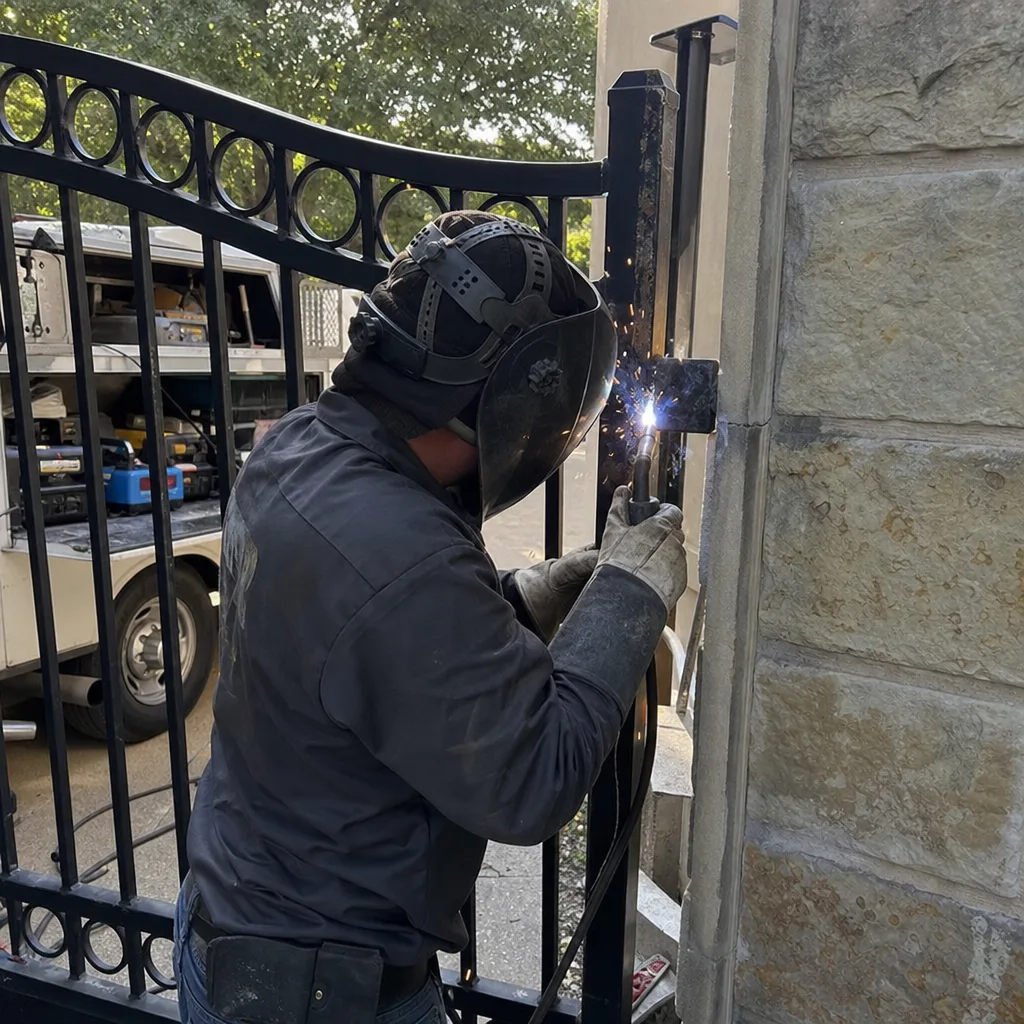
Winter in Mansfield doesn’t freeze the gate; it moves the gate. The freeze-thaw cycle works on water in two places: the concrete footings around the posts and the hinge and latch hardware. Concrete is porous, so water sits in microscopic cracks and pores at the surface. When it freezes, it expands roughly 9%, pushing outward against the concrete and the post. When it thaws, the water drains deeper, and the next freeze pushes again. A Mansfield winter with a dozen freeze-thaw events can shift a gate post enough to change the hinge alignment, and once the hinges are out of line, the gate begins to sag.
What all that movement produces:
- Gate sag: The latch edge of the gate drops lower than the hinge edge. You’ll see the gap at the latch close up and the gap at the hinge widen, or the gate drags on the ground at the end of its swing.
- Motor strain: A sagging gate is heavier to move than a balanced one. The operator draws more current on every cycle, and the overload sensor trips more easily. This is the overload season that kills motors in early spring.
- Hydraulic operator sluggishness: Gates with hydraulic operators (common on larger driveways) will run slower on cold mornings because the hydraulic fluid thickens. That’s normal within limits. A hydraulic operator that takes 30% longer to cycle in December than it did in October is telling you the fluid is due for service.
- Weld joint stress: Steel contracts in cold weather. A weld that was already carrying too much load from a slight sag will develop hairline cracks at the toe of the weld. Check weld joints on the gate frame and the post brackets in January, not April.
What you can safely do in winter:
- Photograph the gate again and compare against your October baseline. The difference is your freeze-thaw movement, visible in a minute.
- Clear ice from the track if you have a sliding gate. Chipped ice in the track acts as a wheel chock and can derail a sliding gate or strip the rack gear.
- Listen to the operator on a cold morning. A lower-pitched hum under load means the motor is working harder than normal and dragging the gate.
- Don’t force the gate open if it’s frozen to the ground or the track. A frozen gate should never be pushed; ice against the gate frame or wheels can bend brackets and pop welds. Warm the gate base with warm (not boiling) water if you need it open immediately.
Winter is not the season to adjust motor limits, replace a control board, or attempt any repair involving live wiring or the gate’s balance point. Cold plastic wire insulation cracks, cold metal is brittle, and a mis-set limit switch on a cold gate can over-travel and bend the gate frame. If a winter repair is unavoidable, that’s when to call a gate repair technician.
Spring (March-April): Soil Movement and Motor Overload Season
Spring is the highest-risk season for motor overload in Mansfield, and it has nothing to do with the motor. It has to do with what the soil has been doing since December. North Texas clay expands when wet and contracts as it dries. A wet winter leaves the soil swollen, and as spring temperatures climb, the drying soil settles unevenly under the post footings. One post settles a quarter inch; the other settles three-eighths. The gate is now out of level, out of alignment, and dragging on the latch or the ground, and the motor on every cycle is pulling against that extra resistance.
The motor doesn’t fail in March because it’s old. It fails because it’s been running at 120-140% of its design load for six weeks. The overload sensor protects it for a while, tripping and resetting, but sustained overload heat eventually degrades the windings. The repair that follows costs more than the post adjustment that would have prevented it.
Spring checklist for Mansfield gates:
- Check the gate’s level line with a bubble level on the top rail. If the bubble moved since October, the posts have moved.
- Measure the gap at the latch and compare to your fall and winter photos. A gap that has shifted more than three-eighths of an inch means hinge or post adjustment is due.
- Watch one full open and close cycle from beside the gate, not from inside a car. Listen to a change in motor pitch near the end of travel. A motor that labors in the last quarter of travel is fighting the ground or the stop.
- Check the operator’s manual release now, in daylight, not during the first spring storm. The manual release lets you open the gate by hand during a power outage, and March weather means both storms and outages.
- Inspect the photo-eyes and safety edges after the winter. A photo-eye (the infrared beam that stops the gate if something crosses the path) that was knocked out of alignment by wind or brush won’t reverse the gate when it should, and a safety edge that’s torn or compressed is a genuine safety issue.
If the gate is dragging, the fix is usually adjustment, not motor replacement. A technician can reset the hinge brackets and post shims to restore the original swing arc, then reset the motor limits to match. That kind of visit runs in the low hundreds, whereas a motor replacement after a spring burnout runs $600 to $1,800 depending on the motor and brand. We handle motors from Elite, Mighty Mule, LiftMaster, FAAC, and a range of others, and the spring call we’d rather take is the adjustment call in March, not the replacement call in May.
For a complete picture of what a Gate Installation in Mansfield involves when a gate has finally reached the end of its structural life after years of freeze-thaw, that page covers the process from footing to final adjustment.
Month-by-Month Mansfield Gate Care Reference
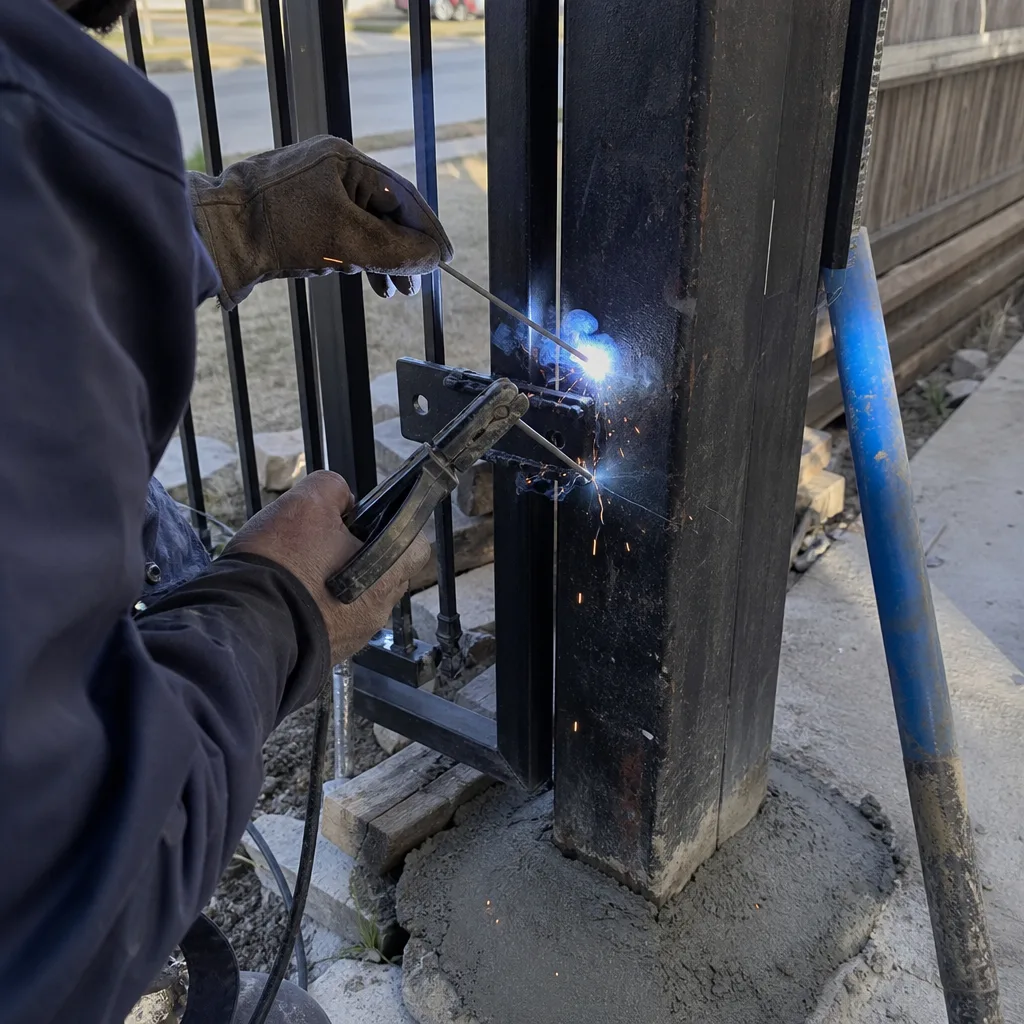
The following reference runs on Mansfield’s actual climate pattern: hot summers with long dry spells, a brief but real winter freeze season, and spring thunderstorms that come with power outages and soil saturation. For The Complete Guide to Gate Repair in Mansfield, see our detailed breakdown. Each month names the one task that matters most in that month, not a generic seasonal chore list.
| Month | Average High / Low | Key Task | Why It Matters in Mansfield |
|---|---|---|---|
| January | 57°F / 34°F | Photograph gate and compare to October baseline; listen for motor strain | Peak freeze-thaw movement is visible now; motor strain shows up before failure |
| February | 62°F / 38°F | Check weld joints and post bases for cracks | Cold steel under load reveals hairline stress cracks early |
| March | 69°F / 46°F | Check gate level and realign if dragging | Soil drying after winter is the top cause of spring motor overload |
| April | 77°F / 54°F | Test manual release and photo-eyes before storm season | Spring outages and high winds demand an operable manual release |
| May | 84°F / 63°F | Install or check shade over control box | First 90°F-plus days arrive; enclosure heat starts climbing |
| June | 91°F / 70°F | Inspect exposed wire insulation for UV damage | Two-plus years of Mansfield sun starts showing on wire jackets |
| July | 95°F / 74°F | Feel control box temperature mid-afternoon | 140°F-plus internal temps degrade board components silently |
| August | 96°F / 74°F | Test battery backup capacity | Peak heat has already shortened capacity; test before fall weather hides it |
| September | 89°F / 69°F | Clean solar panel surface if applicable | Summer dust film cuts panel output at the exact time days shorten |
| October | 79°F / 55°F | Photograph full baseline: gate, gaps, hardware, control box | Last stable month before freeze-thaw; this is your reference for the next six months |
| November | 67°F / 44°F | Lubricate hinges and wheels; touch up rust spots | Dry lubricant before wet winter prevents binding and corrosion |
| December | 58°F / 35°F | Drain or regrade low spots around post bases | Standing water against concrete is the freeze-thaw mechanism itself |
Signs You Should Not Ignore in Any Season
Some gate symptoms are seasonal and will resolve with the weather. Hydraulic operators run slower on cold mornings; that’s fluid viscosity, not a defect. A gate that’s slightly sticky in February may settle back in March. But the following signs are not seasonal. They mean something has changed that will not change back on its own, and delaying the fix multiplies the cost.
- The gate changes sound: a new hum, a grinding at one end of travel, a thunk that wasn’t there. Sound changes mean mechanical contact or electrical load has changed, and gates don’t self-heal.
- The gate reverses for no reason: if the gate starts closing, then reverses before reaching the ground or the stop, the safety system is giving a false or real detection. Either way, the system needs a diagnostic, not a reset-habit.
- The gate cycles slower over weeks: progressive slowdown is never the weather. It’s mounting mechanical resistance or a failing capacitor. Weather changes are sudden; wear is gradual.
- Any visible crack at a weld or a post base: cracks don’t stop propagating. A one-inch weld crack becomes a four-inch crack and then a broken gate frame, and the repair cost jumps at each stage.
- Burnt or corroded wire ends at any connection: heat discoloration at a terminal means resistance is generating heat, and resistance in a 12-volt system is the same thing as a fire risk.
- The gate hits the stop hard or bounces at the end of travel: the limit switch has shifted and the gate is over-traveling. Every hard hit is a stress cycle on welds and hinges.
None of these require a new gate. Most require an adjustment, a component, or a wire repair. They’re all cheaper in week one than in month six. That’s not urgency theater; it’s how mechanical failures compound. A limit switch adjustment costs under $150. The weld repair after six months of hard stops can run three times that.
Common Mistakes to Avoid
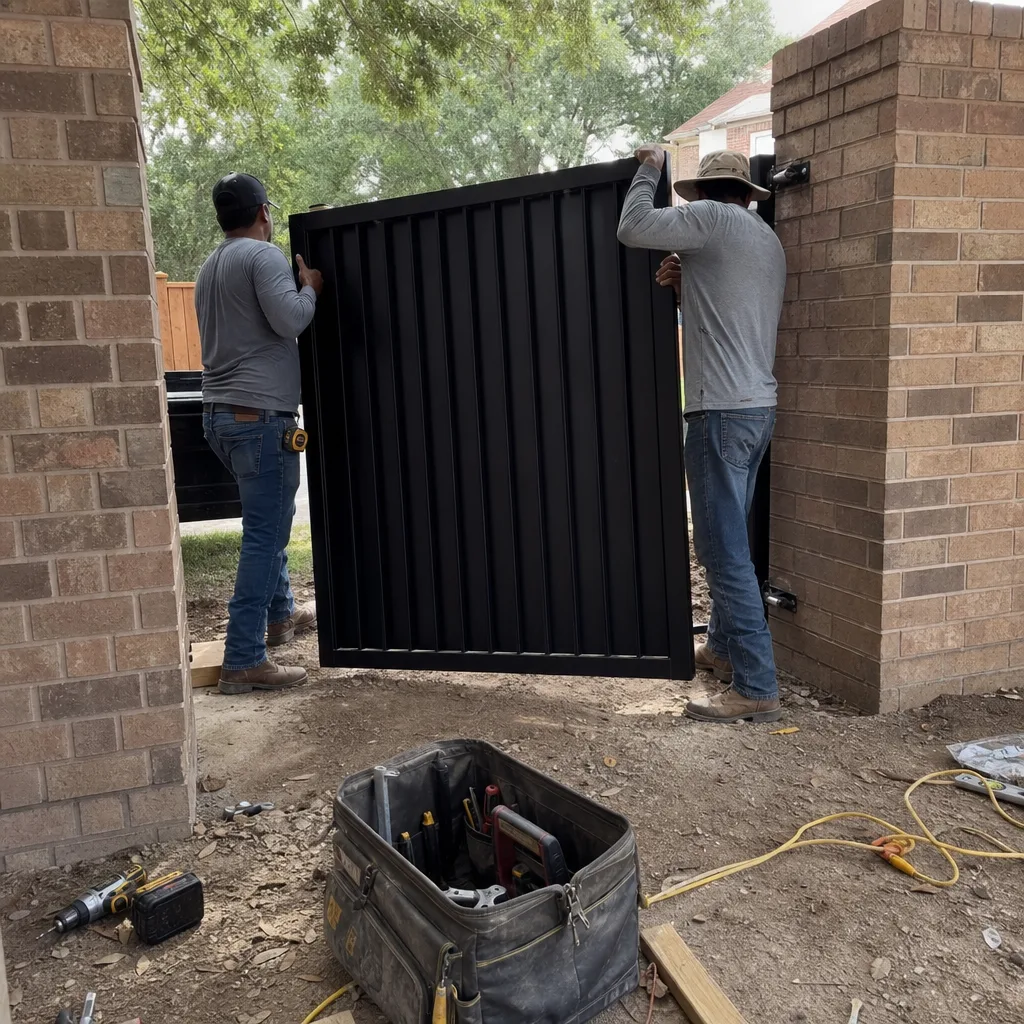
- Treating spring and fall as the only maintenance seasons. Mansfield’s heat and UV damage peak in July and August, and the freeze-thaw damage accumulates in January and February. The generic spring/fall calendar misses both.
- Using WD-40 on hinge pins and rollers. WD-40 is a solvent and water displacer, not a lubricant. It strips existing grease, and the hinge runs dry two weeks later. Use a lithium grease or a dry film lubricant.
- Ignoring a tripped overload sensor. The sensor tripping is the system telling you the gate is working too hard. Resetting it repeatedly without finding the cause is how Mansfield motors burn out in March.
- Installing a shade panel that blocks enclosure ventilation. Shade helps only if airflow still works. A solid panel bolted directly against a control box traps heat behind it and makes the problem worse. There must be an air gap.
- Waiting until the gate stops working to find the manual release. On the day of a storm-related power outage, the gate is closed, the power is out, and you need the release. Find it and test it in good weather.
- Pushing a frozen gate open. A gate frozen to the ground or track should not be forced. The force required to break the ice bond often bends brackets or the gate frame itself, and that damage is immediate and expensive.
- Repainting over rust without primer. Touch-up paint directly on rusted steel doesn’t stop the rust; it hides it while the rust continues underneath. Remove the rust, prime, then paint.
When to Call a Professional
Most seasonal care is within a homeowner’s reach: photograph, lubricate, inspect, clear drainage. But any adjustment that affects the gate’s travel limits, motor load, electrical connections, or post alignment should go to a technician, and high-tension springs or cables on a gate are not DIY components, they store enough energy to cause serious injury if they let go during adjustment. If the gate is not balanced, the operator labors; if the limits are off, the gate over-travels; if a wire is corroded, the connection is a fire risk. Vance Gate Repair Mansfield offers free estimates in Mansfield, call (682) 564-0512, and every estimate is a written price handed over before any work begins.
Frequently Asked Questions
A seasonal inspection and adjustment visit in Mansfield typically runs $95 to $180, depending on the gate type and how many adjustments are needed. That’s the inspection, lubrication, limit setting, and a written photo record of what was found. If a component like a photo-eye or a battery needs replacing, that’s quoted separately before any work starts. Call (682) 564-0512 for an exact price on your gate, estimates are free.
Yes, especially in July and August. Summer heat is when control boards, batteries, and wire insulation degrade even though the gate continues to cycle normally. A control box that reaches 140°F on a west-facing fence shortens the life of the electronics inside, and the first sign of trouble is usually a failure, not a warning. A monthly visual check and shade over the box are the two highest-value summer actions.
That dragging is usually freeze-thaw movement working on the post footings. Water seeps into hairline cracks in the concrete, freezes and expands, and the post shifts by fractions of an inch. Over a Mansfield winter with a dozen freeze-thaw cycles, that accumulates into visible sag. The motor then works harder on every cycle, and spring overloads often follow.
Limit switch settings determine where the gate stops at open and close. Wrong settings mean the gate over-travels and hits the stop hard, which stresses welds and hinges, or under-travels and leaves a gap. The adjustment procedure varies by brand (LiftMaster, FAAC, Mighty Mule, and others differ), and a wrong setting can bend a gate frame. This is a job for a technician who works on gate automation daily, not a homeowner’s weekend project.
First, check the breaker and any GFCI outlet on the gate circuit. If power is confirmed and the gate still doesn’t respond, check the photo-eyes for a knocked beam and the manual release for a tripped position. If none of that restores operation, the issue is likely a surge-damaged control board or a shorted wire, and that’s a diagnostic call. Mansfield’s spring storm season produces a measurable spike in board failures from lightning and power flicker.
Twice a year: once in October before winter moisture arrives, and once in May before summer heat bakes the existing lubrication to varnish. Use a white lithium grease on hinge pins and a dry film lubricant on sliding gate rollers. If the gate has sealed bearings, don’t lubricate at all, the seals do the work, and added grease just collects dust.
The Bottom Line
A Mansfield gate wears in a pattern: summer cooks the electronics, winter moves the posts, spring overloads the motor trapped between both. The care calendar that works in Mansfield is built around that pattern, not a generic four-season rotation. In the warm half of the year, protect the control box, the wiring, and the battery. In the cold half, track the movement, clear the drainage, and don’t force a frozen gate. Photograph in October and compare in January, and you’ll see problems forming months before they become failures. Most of this is 20 minutes a month and a phone camera. When something needs adjusting, get a written price before the work starts, and a photo record when it’s done.
Written by Adrian Vance, Owner at Vance Gate Repair Mansfield, serving Mansfield since 2014.